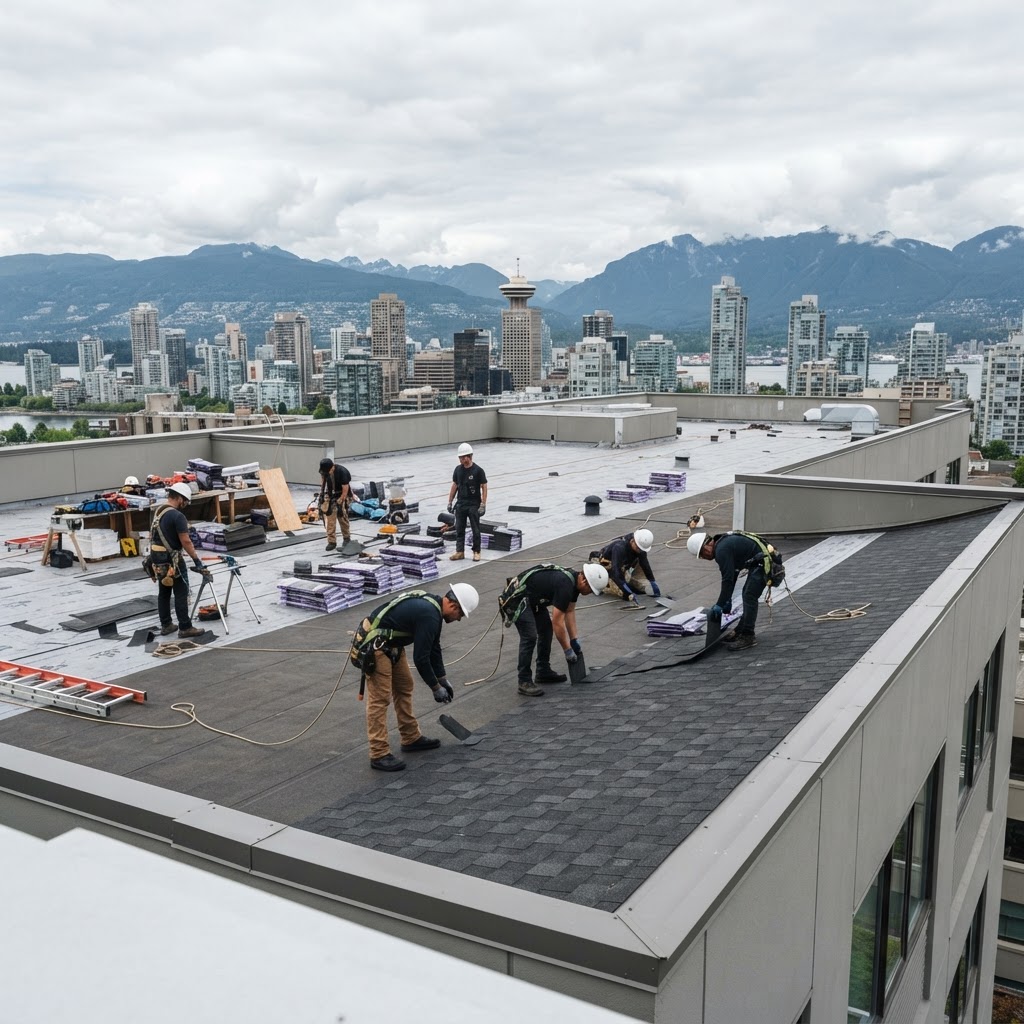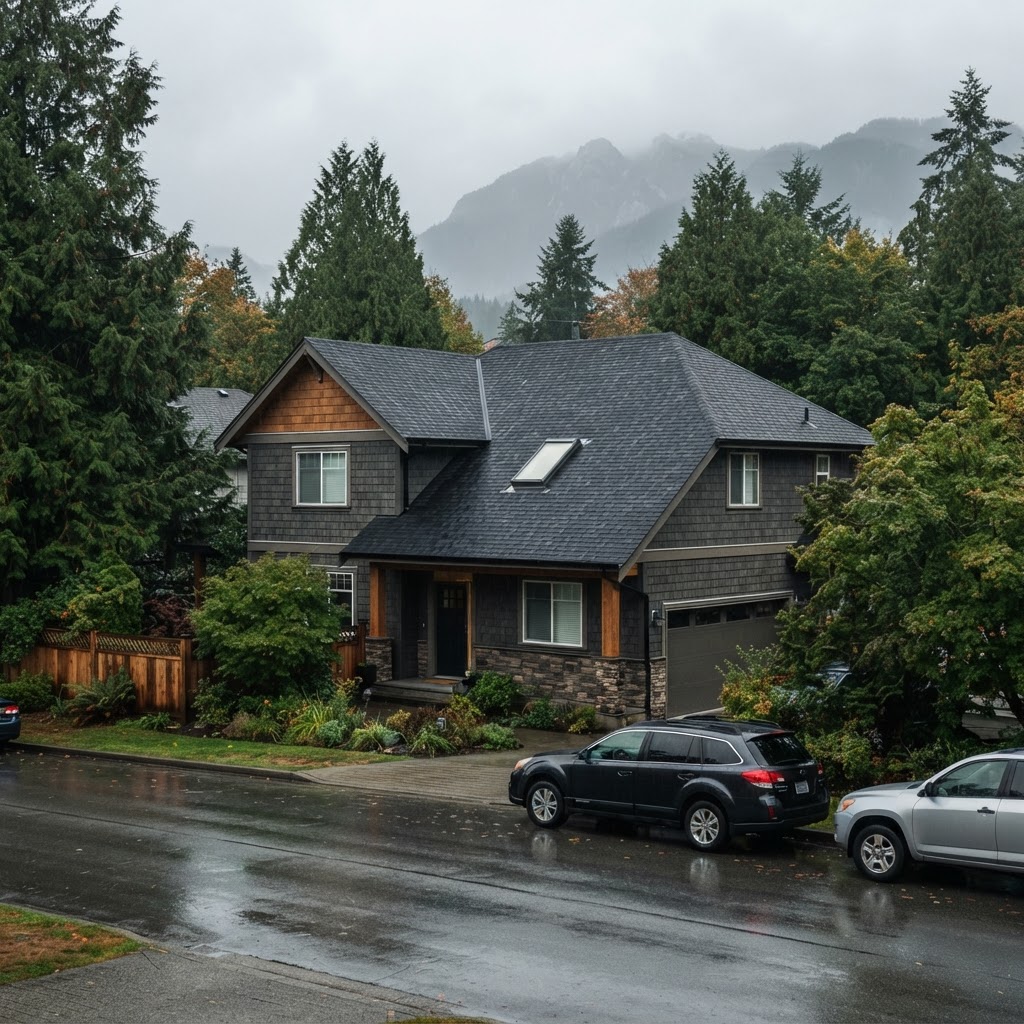
Get a No-Obligation Quote
We respond within 2 hours during business hours.

By the Red Maple Roofing team in Coquitlam. Reviewed for accuracy by Rasheed, Founder & Lead Estimator, Red Maple Roofing.
Skylight replacement vancouver projects are among the most technically demanding roof repairs we handle at Red Maple Roofing, and homeowners across Vancouver and the Lower Mainland deserve to understand exactly what's involved before work begins. A skylight replacement project is critical because the penetration sits at the intersection of your roofing membrane, flashings, and structural deck. Any weakness in that assembly can funnel water directly into your living space. We've completed dozens of these projects across Vancouver, Burnaby, and the surrounding area, and the lessons we've learned about local climate, material compatibility, and code compliance shape every recommendation we make. According to the National Research Council of Canada, proper detailing at roof penetrations is the primary factor in preventing long-term water ingress in coastal climates. This guide covers Vancouver skylight replacement tips to help you keep your roof performing through Vancouver's punishing wet seasons.
Most Vancouver homeowners we work with haven't thought about their skylights until a stain appears on the ceiling. By that point, the damage has often spread into the surrounding sheathing, insulation, and even the structural rafters. The good news is that a well-planned Vancouver skylight replacement, coordinated with a thorough roof assessment, can restore your home's waterproofing integrity. Throughout this guide, we draw on our hands-on experience, current building code requirements, and proven material recommendations to give you the clearest possible picture of what a skylight replacement cost involves in Vancouver's coastal environment. For hands-on help, see our Roof Repair & Leak Detection page, and our Vancouver roofing services page covers local jobs, permits and neighbourhoods we serve in Vancouver.
Skylight Replacement: Integrating Roof Repairs
Planning a skylight replacement without simultaneously assessing the surrounding roof system is, in our experience, one of the most common and costly mistakes homeowners make. The skylight curb, the step flashings, and the field of shingles that drain toward the opening are all interconnected. If the existing roof membrane is nearing the end of its service life, installing a brand-new skylight into deteriorated shingles simply transfers the leak problem. We always recommend a full roof inspection before any skylight replacement services begin, because discovering compromised decking after the skylight is already seated adds significant time and cost to the project.
In our experience with skylights on asphalt and cedar roofs, the joint between the skylight frame and the roofing is where most failures start. Asphalt shingles are the most forgiving in terms of flashing compatibility, because their flexibility allows step flashings to be woven directly into the shingle courses with minimal risk of uplift. Cedar shakes require a different approach: the irregular surface profile means that flashing must be custom-bent and carefully seated to avoid channelling water under the shake tabs. Tile roofs present the greatest complexity, requiring lead or mortar saddles at the skylight head and meticulous counter-flashing installation to handle the tile's pronounced profile.
Reroofing the field around a skylight opening is often the most sensible course of action. We've seen firsthand how moss colonies growing along the upslope edge of a skylight curb can act as a sponge, holding moisture against the flashing and accelerating corrosion. A proper skylight replacement sequence removes all old material, inspects the decking, and installs a self-adhering ice-and-water barrier around the full perimeter. This sequence ensures that every layer of the waterproofing assembly is fresh. For a detailed breakdown of costs, our Roof Replacement Cost in Vancouver provides transparent, project-specific context.
One detail that's easy to overlook during a skylight replacement job is the cricket or saddle that should be built on the upslope side of any skylight wider than 760 mm. A cricket is a small peaked structure that diverts water around the sides of the skylight rather than allowing it to pond against the upslope curb. Without one, debris and water accumulate at the head, creating a chronic moisture problem that accelerates flashing failure and can cause rot. We always include cricket construction in our scope of work for wider skylights, using self-adhering underlayment to extend the service life of the entire assembly.
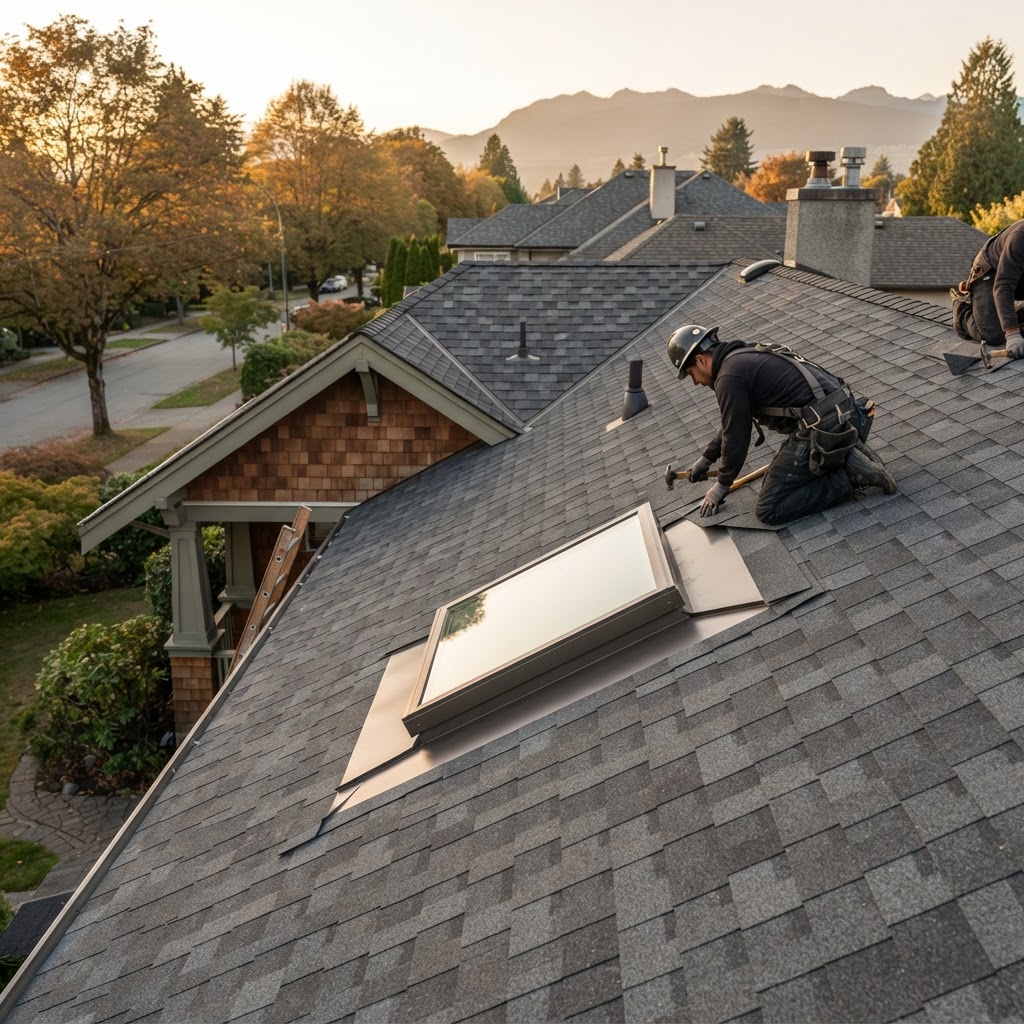
"In our experience, many skylight leaks we're called to repair are caused not by a failed skylight unit itself, but by flashings that were poorly detailed or reused during a previous skylight replacement. Treating the skylight as an isolated component is the single biggest mistake in this trade." - Red Maple Roofing, Lead Installer, Vancouver BC
Navigating the BC Building Code for Roof Replacements
All reroofing and repair projects, including a professional skylight replacement, must comply with the 2024 British Columbia Building Code (BCBC). Part 5 of the BCBC covers Environmental Separation, setting out requirements for protecting buildings against precipitation, including the detailing of penetrations such as skylight openings. Non-compliant work can create complications with home insurance claims, so understanding these requirements before starting any skylight replacement cost evaluation is important.
Beyond environmental separation, Part 4 of the BCBC addresses structural design, including wind and snow load requirements that directly affect how a roof system must be assembled. Vancouver's coastal location means that wind loads are a significant design consideration. The code requires that all roofing fasteners and penetration flashings be specified and installed to resist these uplift forces. For further technical reading on how the national and provincial codes interact, the RCABC's Understanding the Code resource is an excellent starting point.
The Roofing Contractors Association of BC (RCABC) publishes the Roofing Practices Manual (RPM), which serves as the technical companion to the BCBC for roofing work. The RPM translates the code's performance requirements into specific installation procedures for each roofing material type. We treat the RPM as a standard reference on every skylight replacement project, because it bridges the gap between what the building code requires and what the trade actually does on a roof.
Permit requirements for skylight replacement projects vary depending on the scope of work. Structural changes to the roof deck or the addition of new penetrations may require a more detailed submission including drawings. The City of Vancouver enforces these requirements actively. Our recommendation is always to verify permit requirements with the city before starting work, and to work with a licensed contractor who handles the permit process. For homeowners who want to understand how these considerations affect the full project, our Roof Replacement & Reroofing covers the permitting landscape in detail.
Vancouver Climate Challenges: Rainfall and Roof Maintenance
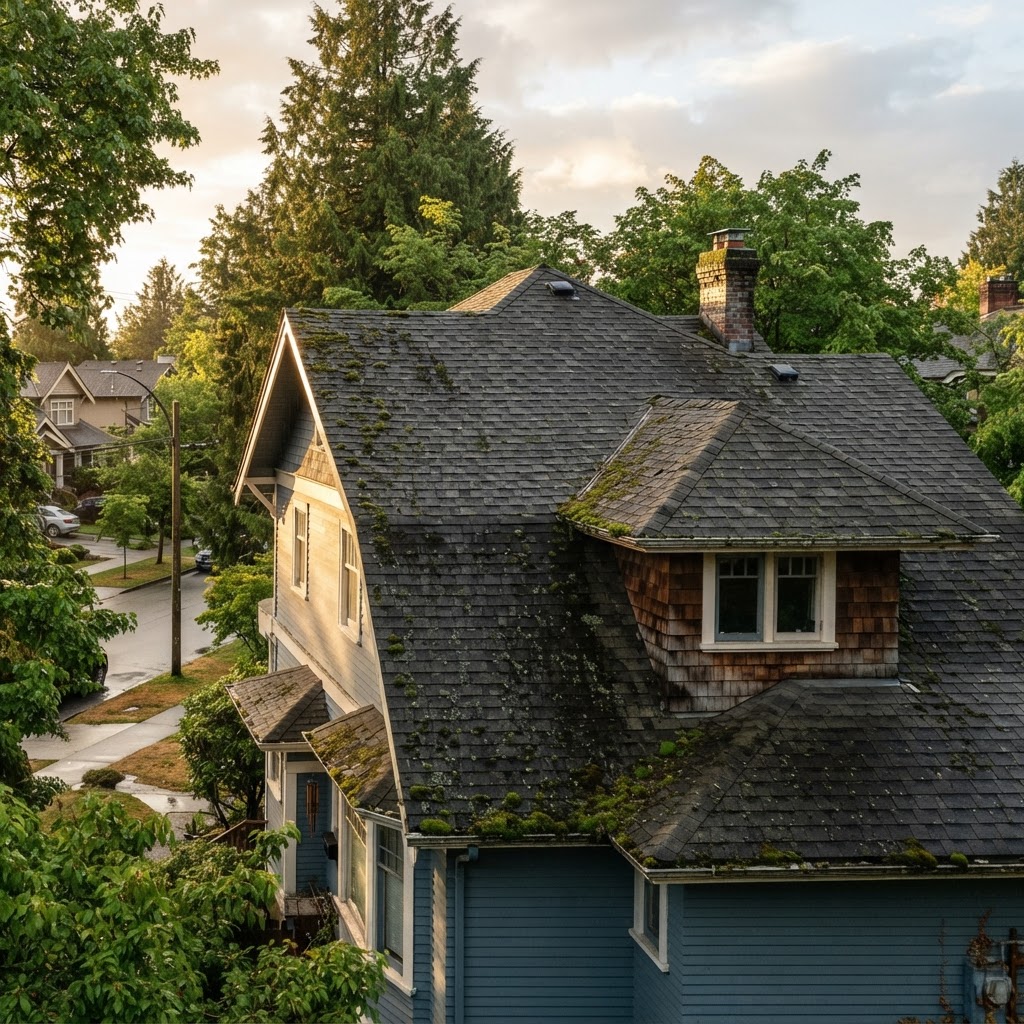
Vancouver receives between 1,189 mm and 1,500 mm of annual rainfall, making it one of the wettest major cities in Canada. This climate reality shapes every decision we make about roof systems and the best skylight replacement techniques. The rain arrives as sustained, low-intensity precipitation that keeps surfaces wet for extended periods, preventing natural drying and creating the conditions for moss and algae to establish themselves. We've seen roofs that looked structurally sound from the street but had moss colonies a centimetre thick holding moisture against the underlayment continuously through the winter months.
Winter temperatures in Vancouver average between 3°C and 7°C, which sits in a problematic range for roofing materials. It's warm enough for biological growth to remain active, but cold enough for freeze-thaw cycling to occur. During the winter, relative humidity frequently exceeds 80%, which accelerates the degradation of organic components in cedar shakes and the granule adhesion in asphalt shingles. For asphalt roofs, granule loss is the primary indicator of age-related vulnerability. This is why proactive annual inspections are far more cost-effective than reactive repairs, especially when protecting a recent skylight replacement installation.
Moss treatment is not optional on cedar and asphalt roofs in Vancouver: it's a routine maintenance requirement that should be built into every homeowner's annual care schedule. Untreated moss physically lifts shingle tabs, breaking the seal between courses and creating channels for water. We recommend a zinc sulphate or potassium soap treatment applied in late summer, combined with the physical removal of established colonies using a soft-bristle brush. For a full breakdown of professional moss treatment, our team at Roof Moss Removal & Treatment has documented the correct approach in detail.
Gutter maintenance is directly linked to roof longevity in Vancouver's high-rainfall environment. When gutters are blocked, the water that should drain off the roof backs up under the eaves flashing, saturating the fascia board and the first courses of roofing material. Over one or two wet seasons, this repeated saturation causes rot in the fascia and softening of the decking. We always include a gutter inspection as part of our skylight replacement assessment visits. If your gutters haven't been cleaned since spring, our Gutter Cleaning & Maintenance explains why pre-winter cleaning is one of the highest-return maintenance tasks.
Reroofing Options: Asphalt, Cedar, and Tile Materials
Choosing the right reroofing material for a Vancouver home involves balancing cost, aesthetics, longevity, and performance in a high-humidity coastal environment. Asphalt shingles are by far the most common choice, offering a service life of 25 to 30 years with proper installation. Architectural-grade asphalt shingles, with their laminated multi-layer construction, perform significantly better than three-tab shingles because their added mass and sealed adhesive strips resist wind uplift. When planning your skylight replacement, ensure your chosen material is compatible with the flashing systems required for your roof's architecture.
Cedar shakes offer a natural aesthetic that suits many of Vancouver's older character homes, and a well-maintained cedar roof can last 30 to 40 years. Cedar requires annual moss treatment, periodic cleaning, and re-application of water-repellent preservatives to achieve that lifespan. We've seen cedar roofs that were neglected develop significant shake end splits and cupping, making them poor candidates for long-term protection. The RCABC Roofing Practices Manual includes specific guidance on cedar shake installation standards that our crews follow on every project.
Concrete and clay tile roofs offer the longest service life, with concrete tiles rated at 40 to 50 years. The primary consideration for tile on a Vancouver home is structural: tiles are significantly heavier, and the roof structure must be assessed by an engineer to confirm it can support the additional load. Tile is also more labour-intensive to install, which affects project timelines. Its integration with skylight flashings requires the lead or mortar saddles we described earlier. For homeowners comparing the full cost picture of a tile versus asphalt reroof, we encourage you to request a free quote to walk through the material and labour components specific to your home.
- Service life: asphalt shingles rated 25 to 30 years, cedar shakes 30 to 40 years with maintenance, concrete tile 40 to 50 years
- Wind resistance: architectural asphalt shingles and concrete tile both perform well against coastal gusts exceeding 70 km/h when properly fastened
- Moss and algae resistance: asphalt shingles with algae-resistant copper granules outperform standard shingles significantly in Vancouver's high-humidity environment
- Structural load: concrete and clay tile require a structural assessment of existing rafters before installation, particularly on pre-1980 homes
- Maintenance requirements: cedar demands annual treatment and periodic preservative application; asphalt requires periodic moss treatment and gutter maintenance
- Compatibility with skylight flashings: all three materials require different flashing geometries, with tile being the most complex
- Budget and long-term cost: while tile has the highest upfront cost, its 40 to 50-year lifespan can make it competitive on a cost-per-year basis
Beyond material selection, the underlayment system beneath the field material is critical to long-term performance in Vancouver's climate. The minimum standard for Vancouver is a self-adhering SBS-modified bitumen ice-and-water barrier at all eaves, valleys, and penetrations, with a breathable synthetic underlayment over the remainder of the deck. Getting this layer right is just as important as the shingles you can see from the ground, especially for skylight replacement integrity. For a broader view of what our team delivers, visit our services page for a full breakdown of what each reroofing project includes.
Essential Gutter Cleaning and Repair Strategies
Proper drainage is one of the most overlooked aspects of home maintenance in British Columbia, yet it directly affects the long-term health of your roof. We've seen firsthand how a blocked downspout can cause water to back up under shingles, saturate roof decking, and eventually seep into wall cavities. When that happens, the repair bill grows fast, and what started as a simple cleaning job turns into a major remediation project, often affecting the flashings around your skylights.
Most Vancouver homeowners we work with underestimate how quickly gutters fill with organic debris, particularly in neighbourhoods lined with cedar, maple, and fir trees. Leaves, pine needles, and seed pods accumulate through autumn and winter, compacting into dense mats. We recommend scheduling a professional gutter cleaning at minimum twice per year - once in late autumn and once in early spring. Our Gutter Cleaning & Maintenance article covers specific timing strategies for Greater Vancouver neighbourhoods.
Beyond cleaning, gutter condition deserves close attention. Aluminium gutters are common in Vancouver's residential market, but they're not immune to damage. Coastal wind gusts exceeding 70 km/h during severe winter storms can pull gutter sections away from fascia boards, particularly when those boards have started to rot from moisture exposure. In our experience installing and repairing gutters, we find that improper slope is one of the most common problems. A correctly pitched gutter should drop approximately 6 mm for every 3 metres of run to maintain adequate flow.
- Remove all debris twice yearly - more frequently in heavily treed areas
- Flush gutters with a garden hose to confirm water flows freely to downspouts
- Inspect all gutter seams, end caps, and joints for signs of leaking or separation
- Check fascia boards behind gutters for soft spots indicating rot or moisture damage
- Confirm downspouts extend at least 1.5 metres away from the foundation
- Inspect gutter hangers and spikes for pull-through, especially after heavy storms
Gutter repairs should never be deferred. A leaking gutter joint that drips water against your fascia board for a full Vancouver winter can cause serious wood rot that spreads into the rafter tails. If you've noticed paint peeling on your fascia, staining on your exterior siding, or puddles forming near your foundation after rain, these are reliable signals that your gutters need immediate attention. We encourage homeowners to contact us for a free quote at the first sign of drainage problems - catching these issues early is essential when you have a skylight replacement installation to protect.
Effective Moss Treatment for Vancouver Roofs
Vancouver's combination of mild temperatures and persistently high humidity creates ideal conditions for moss, lichen, and algae to colonise residential rooftops. During the winter months, relative humidity in the region frequently exceeds 80%. We've seen cedar shake roofs develop significant moss coverage within two to three years without treatment, and asphalt shingle roofs are certainly not immune. Left untreated, moss retains moisture against the roofing surface, which accelerates the breakdown of shingle granules and causes the natural oils in cedar shakes to degrade much faster than they otherwise would, threatening your roof's overall integrity.
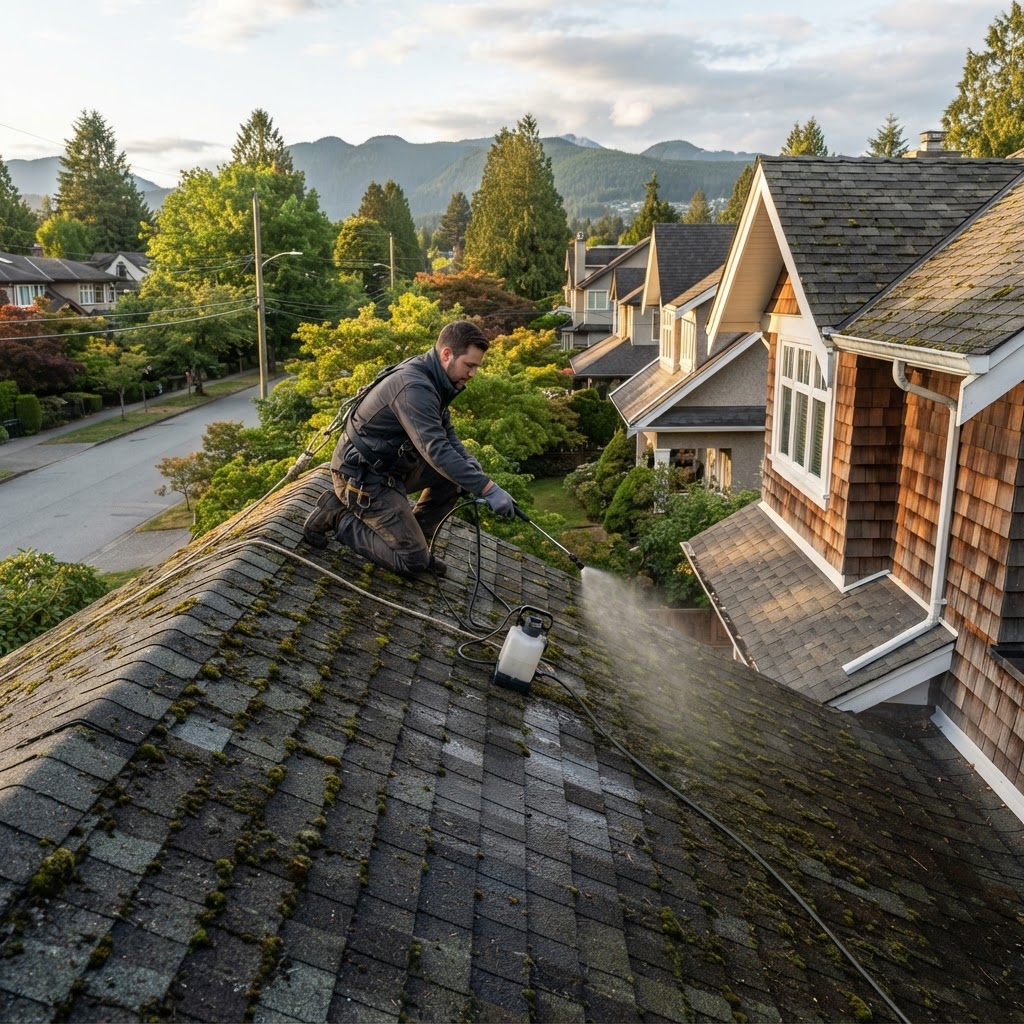
Professional moss treatment involves more than simply pressure washing. High-pressure washing is something we actively discourage on asphalt shingles because the force strips granules from the shingle surface, dramatically shortening the roof's remaining lifespan. The proper approach uses a low-pressure rinse combined with a biocide treatment - typically a zinc sulphate or potassium salt of fatty acids formulation - that kills moss at the root level without mechanical abrasion. The Roofing Contractors Association of BC's Roofing Practices Manual outlines best practices for roof maintenance that align with this non-abrasive approach.
Cedar shake roofs require a different approach because the material is more porous and sensitive to chemical treatments. We've found that a diluted sodium hypochlorite solution, applied carefully and rinsed thoroughly, is effective for cedar, but the concentration must be controlled to avoid bleaching the wood fibres. Cedar roofs also benefit significantly from annual inspection of individual shake condition because moss growth often indicates that the shakes are cupping or cracking, allowing moisture to penetrate. Our Roof Moss Removal & Treatment resource provides additional context on treatment methods.
Prevention is always more cost-effective than remediation. Zinc or copper strip installation along the ridge line is one of the most practical preventative measures available - when it rains, trace amounts of metal ions wash down the roof surface and inhibit moss germination. Trimming tree branches that overhang the roof also reduces shade and debris accumulation, which are the two primary conditions moss needs to thrive. In our experience, homeowners who combine biannual professional cleaning with zinc strip installation consistently see their roofs remain moss-free. If you're uncertain about the current condition of your roof, or if you are planning a skylight replacement, a professional inspection is the first step.
It's also worth recognising that moss and algae are early indicators of broader moisture management issues. A roof that stays wet longer than it should - due to poor ventilation or clogged gutters - will always be more susceptible to biological growth. Our team always considers the full roofing system when recommending a treatment programme, because treating symptoms without addressing underlying conditions leads to recurring problems. For a detailed look at what's involved in a full roofing restoration, our Roof Restoration vs. Replacement article is a helpful reference.
Wind Loads and Structural Design in Coastal BC
Coastal wind loads are a serious structural consideration for residential roofing in Greater Vancouver, and one that's often underestimated until a severe storm causes visible damage. The region regularly experiences winter storms with wind gusts exceeding 70 km/h. Proper structural design for wind resistance is mandated under Section 4.1.7 of the 2024 British Columbia Building Code. These requirements dictate not only the fastening patterns for roofing materials, but also the design of the structural roof system itself, including rafter sizing and connection hardware specifications.
In practical terms, wind load compliance affects the roofing installation in several important ways. Asphalt shingles in high-wind zones must be fastened with a minimum of six nails per shingle. Underlayment selection also matters significantly - a self-adhering modified bitumen underlayment provides far superior wind-driven rain resistance compared to a mechanically fastened synthetic felt, which is essential for projects like a skylight replacement. The RCABC Roofing Practices Manual provides detailed specifications for underlayment installation in coastal BC climates.
Roof-to-wall connections are another critical element of wind resistance. Hurricane ties and H-clip connectors transfer wind uplift loads from the roof structure down into the wall framing. Many older Vancouver homes built before updated wind load provisions were incorporated into the building code lack these connectors entirely. If your home was built before 1995, a structural inspection by a qualified roofer is a worthwhile precaution before undergoing major work like a skylight replacement. For broader context on what's involved in a full project, our Roof Replacement & Reroofing covers these structural considerations.
- Six-nail fastening pattern for asphalt shingles in high-wind exposure zones
- Self-adhering modified bitumen underlayment at all eaves and rakes
- Ice and water shield applied at least 900 mm past the interior warm wall line at eaves
- Hurricane tie connectors at every rafter-to-top-plate connection
- Proper sheathing edge nailing at 150 mm spacing to resist panel racking
- Drip edge metal mechanically fastened at maximum 300 mm spacing to prevent wind uplift at the eave
The relationship between proper fastening, quality underlayment, and overall roof system performance is something we discuss with every homeowner. Cutting costs on underlayment to reduce upfront expense is a false economy in a climate like Vancouver's. Reroofing projects that fully comply with the 2024 BCBC wind load provisions and follow the RCABC installation standards deliver measurably better performance, reducing both emergency repair frequency and long-term ownership costs. The Technical Updates from the RCABC provide ongoing guidance on how code variations affect design requirements. If you'd like to understand what a code-compliant skylight replacement involves, we invite you to request a free quote.
Understanding the full scope of Vancouver's roofing environment - from wind load requirements to coastal humidity - helps homeowners make informed decisions about maintenance. Whether you're dealing with moss growth, gutter issues, or planning a skylight replacement, addressing these issues promptly is the right approach. Deferred maintenance in Vancouver's climate rarely stays minor. Our team at Red Maple Roofing works across the Lower Mainland, and we bring a thorough understanding of local conditions to every project. You can learn more about where we work on our service areas page.
The Importance of Comprehensive Roof Inspections
Annual roof inspections are one of the most cost-effective investments a Vancouver homeowner can make. Our team has seen firsthand how minor issues, such as a few cracked shingles or a small section of compromised flashing, can escalate into significant water infiltration problems. Vancouver receives an average of 1,189 mm of rainfall annually. Catching these vulnerabilities early - ideally before the heaviest November through February rainfall - is always less expensive than emergency repairs after a leak has caused damage. This is especially true for homes that have had a previous skylight replacement, as flashings around penetrations require consistent professional monitoring.
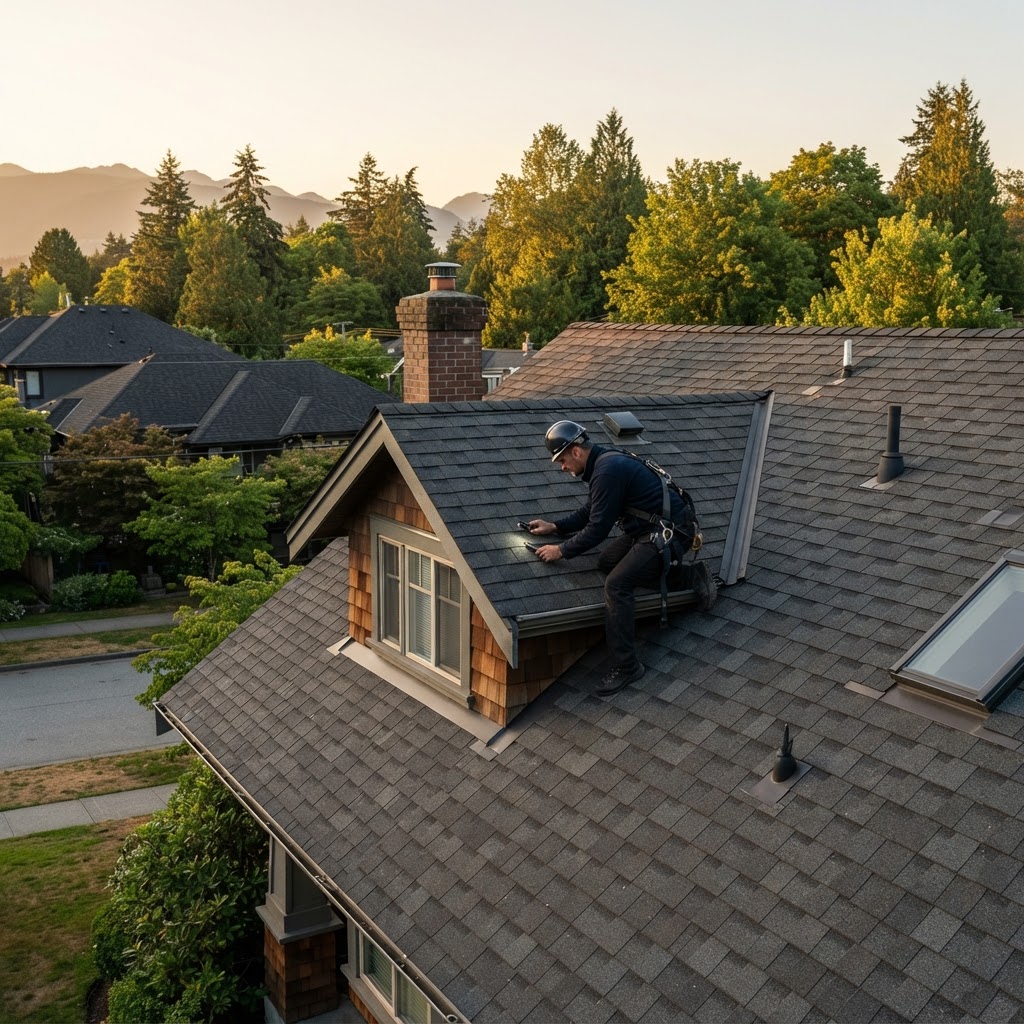
In our experience inspecting roofs across Vancouver, Burnaby, and Coquitlam, the most commonly overlooked vulnerability is deteriorating underlayment. The underlayment sits beneath your visible shingles and acts as a critical secondary barrier. Over time, especially in high-humidity winters where relative humidity frequently exceeds 80%, the underlayment can become brittle or separate at the seams. During a thorough inspection, our technicians lift several representative shingles to assess underlayment condition directly. We also inspect all penetrations, including vent stacks and skylight frames, because these are statistically among the most frequent sources of leaks.
Flashing inspection is another critical component. Metal flashing at valleys, chimneys, and wall-to-roof junctions is responsible for redirecting water away from these vulnerable points. We've seen flashing failures cause thousands of dollars in structural damage because the metal had corroded or was never properly sealed during the original installation. The Roofing Contractors Association of BC's Roofing Practices Manual outlines specific installation standards that all compliant roofing contractors must follow. When we inspect your roof, we verify that all flashing meets these standards.
Gutter condition is always assessed alongside the roof structure itself, because blocked gutters directly contribute to fascia rot and soffit damage. Most homeowners are surprised to learn that gutter overflow can cause standing water to back up under the first course of shingles, especially during intense storm events. We recommend pairing your annual roof inspection with a professional gutter cleaning service. Our team has covered this thoroughly in our guide on Gutter Cleaning & Maintenance. Combining both services in a single visit is efficient for long-term protection.
Fire Resistance Ratings for Residential Roofing
Fire safety is a fundamental component of residential roofing compliance under the 2024 British Columbia Building Code. The BCBC classifies roofing materials according to their fire resistance performance, with Class A representing the highest level of protection. Class A materials, which include most modern fibreglass-reinforced asphalt shingles, are capable of withstanding severe fire exposure. If you are scheduling a skylight replacement, ensure that your chosen roofing material maintains the necessary fire rating to keep your home compliant with current code requirements.
In practice, most urban Vancouver neighbourhoods benefit significantly from Class A rated asphalt shingles. The density of residential construction in areas such as East Vancouver and Kitsilano means that a roof fire can spread rapidly if non-rated materials are used. We've seen firsthand how insurance companies in BC are increasingly scrutinising roofing material ratings during policy renewals, making compliance a financial concern as well. Homeowners replacing an old cedar shake roof should be particularly aware that untreated cedar carries no fire resistance rating and may no longer meet current code requirements for their specific property location.
Asphalt shingles achieving a Class A fire rating must meet the UL 790 or equivalent CSA standard. Not all shingles sold in Canadian building supply retailers are Class A rated, so it is critical to verify documentation. Our team provides homeowners with technical data sheets for the products we install, clearly showing the fire resistance and warranty terms. For homeowners who want to understand how these specifications interact with broader building requirements, the RCABC's Understanding the Code resource provides an accessible explanation.
Concrete and clay tile roofing systems inherently achieve Class A fire ratings, making them an excellent choice for homeowners prioritising safety. However, tile roofs require structural assessment before installation, because they are substantially heavier than asphalt shingles. Tile is much heavier than asphalt, so older Vancouver houses often need a structural review before anyone installs it. We do not install tile ourselves. This is precisely why a pre-reroofing structural inspection is a practical necessity for the safety of your home and family, especially when combined with a skylight replacement upgrade.
Choosing a Trusted Vancouver Roofing Contractor for Skylight Replacement and Beyond
Selecting the right roofing contractor in Vancouver is one of the most consequential decisions a homeowner makes. The difference between a compliant, well-executed installation and a substandard one often comes down to whether the contractor holds active membership with the Roofing Contractors Association of BC (RCABC) and operates according to the standards set out in the RCABC Roofing Practices Manual. When you receive a quote from a contractor who cannot demonstrate RCABC membership, you are taking a significant risk with your home's structural integrity, especially for complex jobs like a skylight replacement project.
At Red Maple Roofing, we follow RCABC standards on every project. Most Vancouver homeowners tell us they received multiple quotes that varied wildly in price, with little explanation. In our experience, those price gaps almost always reflect differences in materials quality or flashing method. A low quote that cuts corners on ice-and-water shield membrane or uses non-rated underlayment will inevitably result in premature failures. We believe in transparent, detailed written proposals that itemise every component so homeowners can make genuinely informed decisions. You can explore our pricing page for general guidance.
Roof maintenance is just as important as the quality of the initial installation, and a trustworthy contractor will be honest about what your roof needs rather than simply recommending a full replacement. We've completed many projects where a comprehensive moss treatment programme, combined with flashing repairs, extended a roof's serviceable life by seven to ten years. Proactive maintenance for your asphalt or cedar roof pays for itself. For homeowners interested in understanding what proper control involves, our detailed post on Roof Moss Removal & Treatment explains the process.
Whether your project involves a complete reroofing, targeted repairs, or a skylight replacement, working with a contractor who knows Vancouver's climate is essential. Our service areas page outlines all of the communities we serve. If you're already comparing contractors, our guide on Roof Replacement & Reroofing is a useful starting point. We also encourage homeowners to read our guide on How to Choose a Roofing Contractor in Vancouver before signing any contract.
How often should I schedule a roof inspection and gutter cleaning in Vancouver?
What are the BC Building Code requirements for reroofing an older home?
Which reroofing material performs best in Vancouver's heavy annual rainfall?
How does professional moss treatment extend the life of my asphalt or cedar roof?
Does my skylight replacement project require a full roof replacement?
Protecting your home in Vancouver's demanding coastal climate requires the right materials, proper installation, and a maintenance programme that keeps pace with the weather. Whether you're planning a full reroofing project, addressing a repair, or managing moss, Red Maple Roofing brings the technical knowledge and RCABC-aligned practices that Vancouver homeowners deserve. Our team is ready to assess your roof and provide a detailed written proposal. Call us today at (778) 239-1701 or visit our free quote page to get started with your skylight replacement project.