Get a No-Obligation Quote
We respond within 2 hours during business hours.

By the Red Maple Roofing team in Coquitlam. Reviewed for accuracy by Rasheed, Founder & Lead Estimator, Red Maple Roofing.
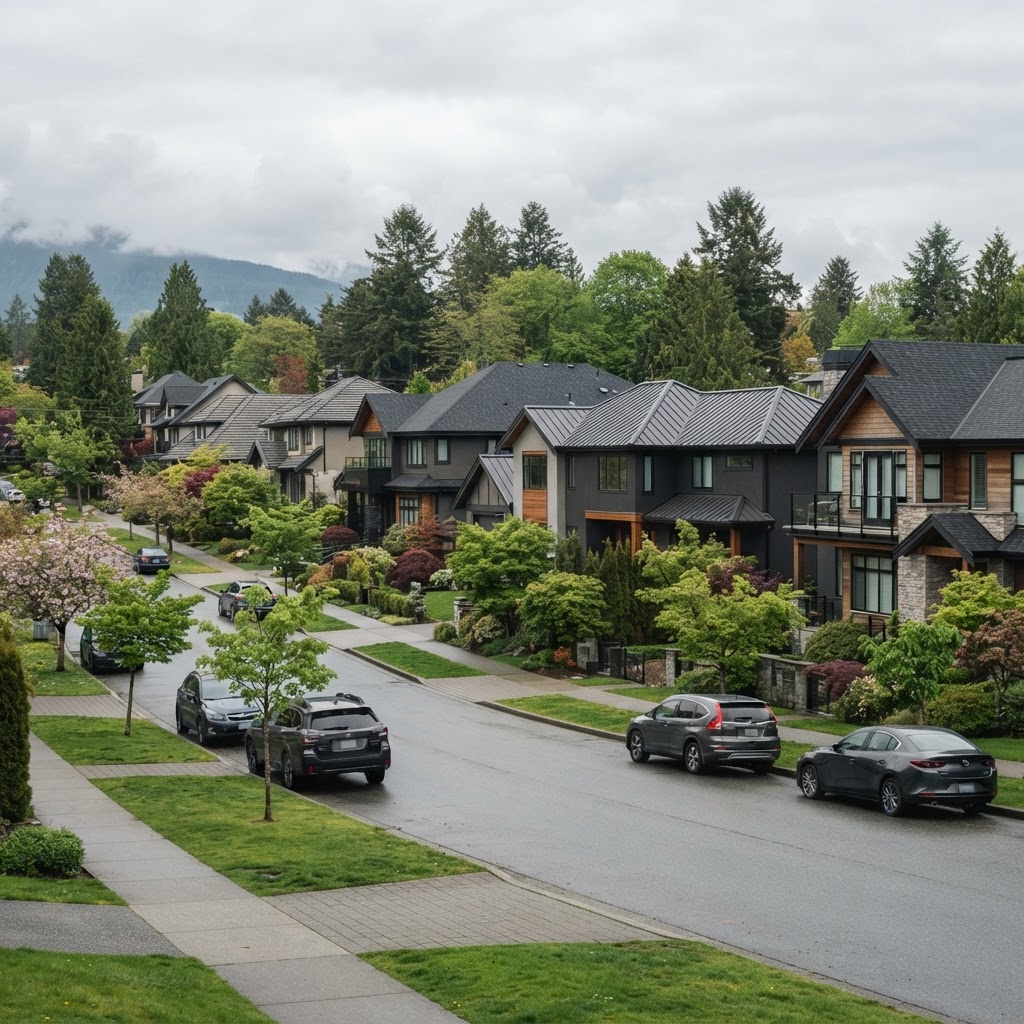
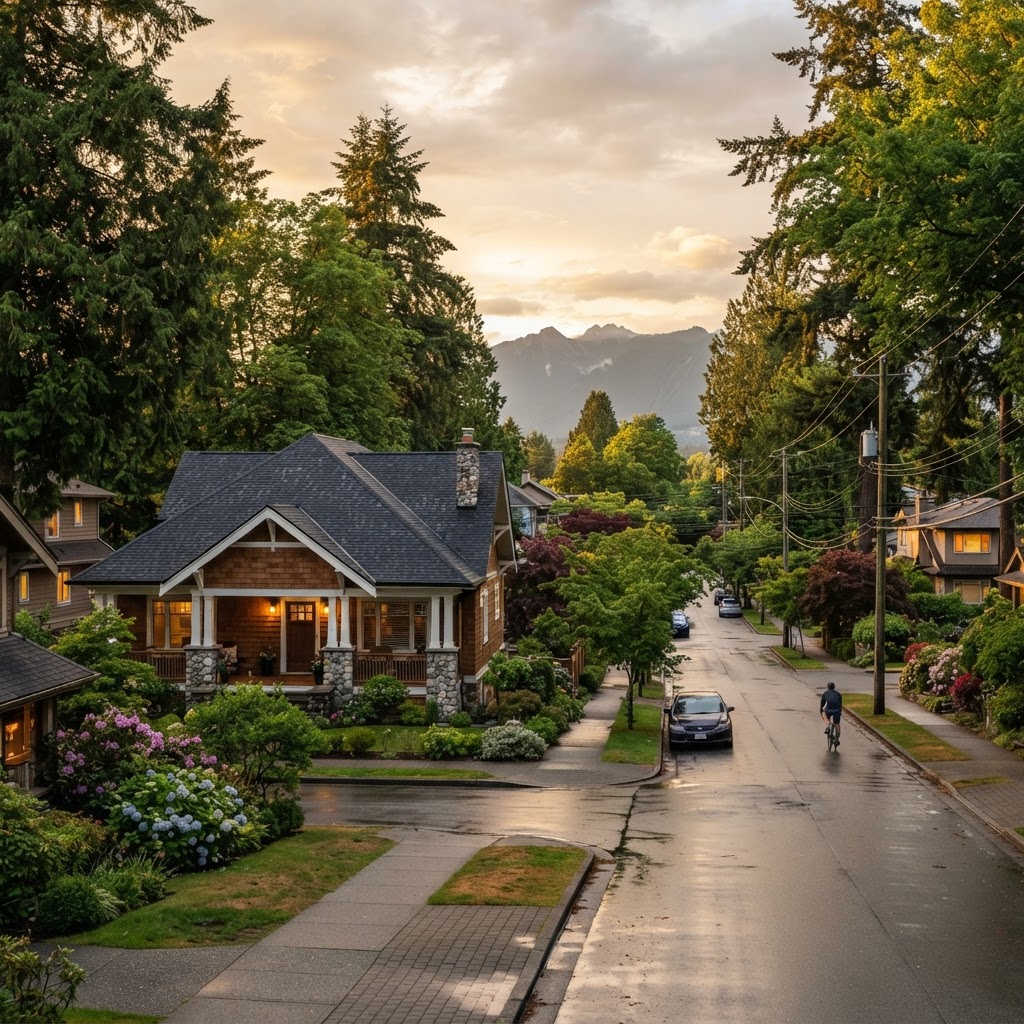
Shingle roofing services are one of the most essential investments you can make as a homeowner in Vancouver and the Lower Mainland. We've been installing, repairing, and maintaining roofs across this region for years, and one thing is always clear: the local climate demands more from your roof than almost anywhere else in Canada. This guide covers everything you need to know about keeping your shingle roof in top shape, from understanding when a repair is enough to recognising the signs that a full reroofing is overdue.
Most Vancouver homeowners we work with are surprised by how quickly a small roofing issue can escalate into a major problem. A few missing shingles after a windstorm, a patch of moss creeping across the north-facing slope, a gutter pulling away from the fascia - these aren't cosmetic concerns. In a city that receives well over 1,150 mm of rain every year, every gap in your roof's defences matters. The good news is that with the right professional care, a well-installed asphalt shingle roof can protect your home reliably for 20 to 30 years. For hands-on help, see our Asphalt Shingle Roofing and Roof Replacement & Reroofing pages, and our Vancouver roofing services page covers local jobs, permits and neighbourhoods we serve in Vancouver.
Understanding Shingle Roofing Services in Vancouver
Shingle roofing services in Vancouver cover a broad range of work, and understanding what each involves helps you make better decisions about your home. At the most basic level, roof repair addresses isolated problems - a handful of cracked or missing shingles, a damaged flashing detail around a vent, or a localised leak above a bedroom. Repairs are cost-effective and appropriate when the rest of the roof is structurally sound and the shingles still have serviceable life left in them. In our experience installing and repairing roofs across the Lower Mainland, a well-maintained asphalt shingle roof that was properly installed rarely needs a full replacement before the 20-year mark.
Reroofing is a more comprehensive undertaking. It involves stripping the existing shingle layers down to the roof deck, inspecting the decking for rot or structural damage, installing a new underlayment, and then laying fresh shingles to manufacturer specifications. The Roofing Contractors Association of BC sets detailed standards for asphalt shingle installation, covering everything from nail patterns to valley flashing techniques. Following these standards isn't optional - it's the difference between a roof that performs for 25 years and one that starts failing within five. Reroofing is the right choice when shingles are at or beyond their serviceable life, when granule loss is widespread, or when multiple repairs have been needed in a short period.
Beyond repair and reroofing, professional shingle roofing services also include regular maintenance - and this is where many homeowners fall short. Maintenance typically covers moss and algae treatment, gutter cleaning, flashing inspections, and minor preventive repairs. Vancouver's damp climate creates near-perfect conditions for moss growth, particularly on north-facing or shaded roof surfaces. Moss doesn't just look unsightly; its root-like structures physically lift shingle edges, allowing rainwater to work its way underneath. We recommend a professional moss treatment at least every two years, combined with annual gutter cleaning to keep water flowing freely off the roof. You can explore Roof Moss Removal & Treatment to understand what a full treatment involves.
Local weather patterns directly shape the kind of shingle roofing services your home needs. The freeze-thaw cycles that occur in higher elevation neighbourhoods like Burnaby Mountain or the North Shore accelerate shingle wear differently than the sustained wet seasons experienced closer to the coast. Wind-driven rain, which is common during winter storms, tests the quality of flashings and sealants in ways that still, vertical rain simply doesn't. In our experience, homeowners who schedule regular maintenance rather than waiting for an obvious problem end up spending significantly less over the lifespan of their roof. Proactive care is always more affordable than emergency repairs.
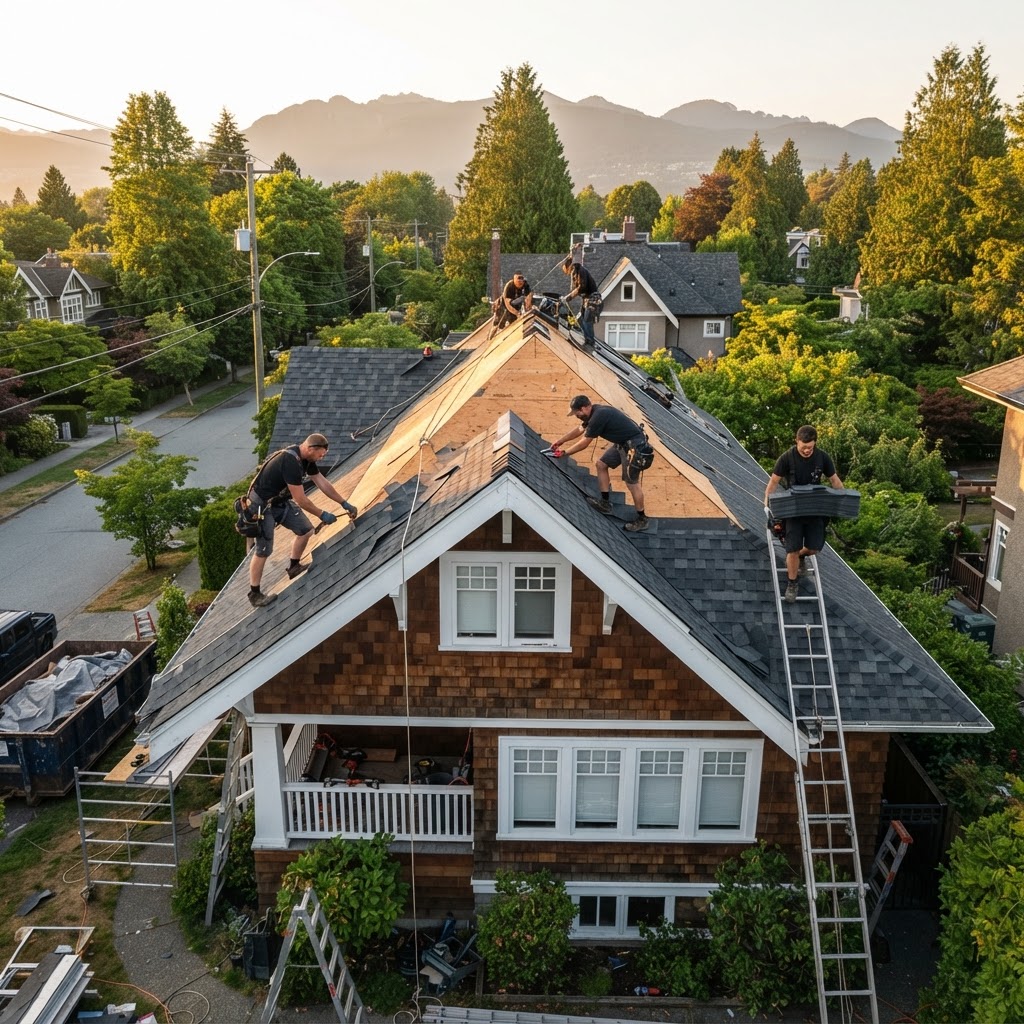
In our experience, the roofs that fail earliest in Vancouver aren't the ones hit hardest by storms - they're the ones that were neglected between storms. Moss, blocked gutters, and minor cracked shingles left untreated for one wet season can cause more cumulative damage than a single windstorm event. Consistent maintenance is the single most effective thing a homeowner can do to extend the life of their shingle roof.
The Impact of Vancouver's Climate on Asphalt Shingles
Vancouver's climate is classified as a temperate rainforest environment, and the precipitation statistics reflect just how wet the city truly is. According to Environment and Climate Change Canada's historical climate normals, annual rainfall ranges from approximately 1,153 mm at Vancouver International Airport to over 1,458 mm in communities closer to the North Shore mountains. That's a staggering volume of water falling on your roof every single year. For context, Toronto averages around 831 mm annually - Vancouver homeowners are managing nearly twice that precipitation load. Every millimetre of that rain tests the integrity of your shingles, your underlayment, your flashings, and your gutters simultaneously.
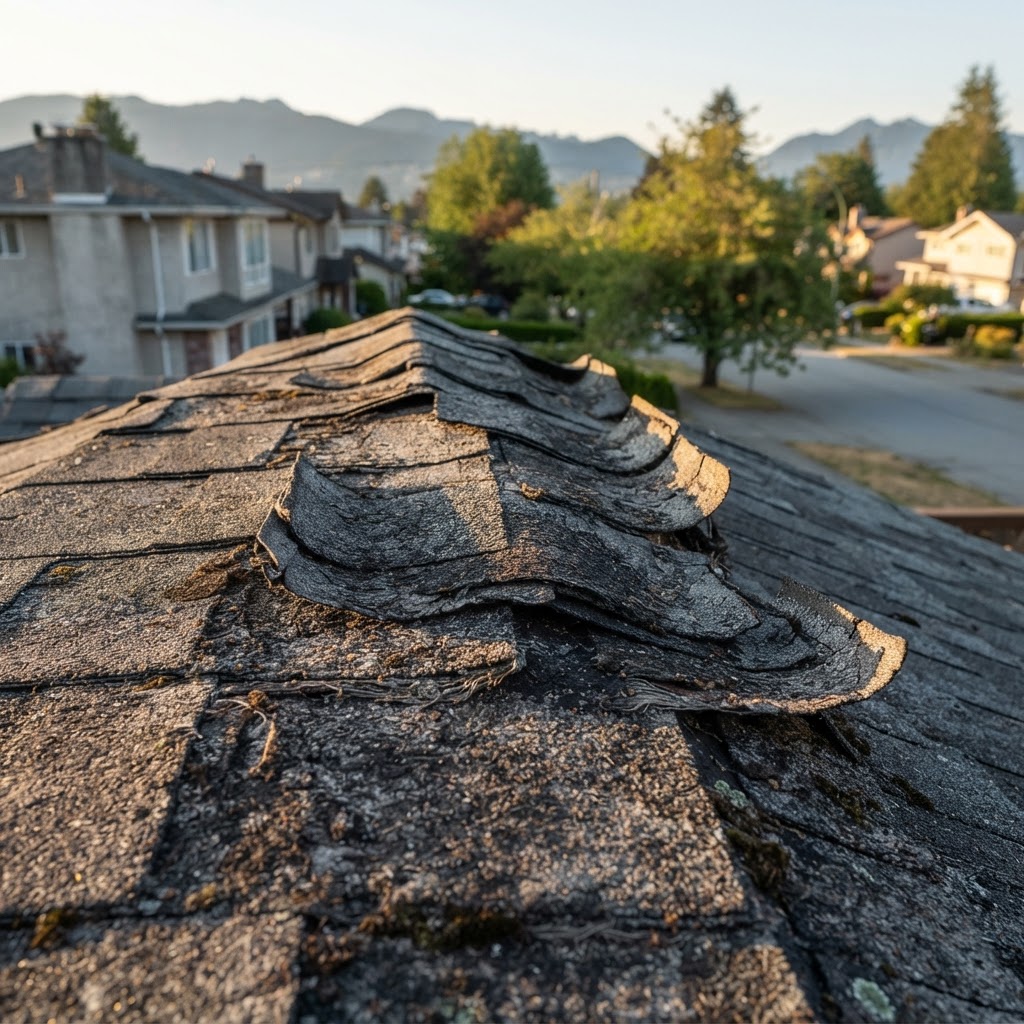
Asphalt shingles are the most widely used roofing material in Vancouver for good reason. They're cost-effective, relatively straightforward to install correctly, and when properly maintained, they can last 20 to 30 years even in this demanding climate. That said, the persistent moisture does create specific vulnerabilities. Granule loss is one of the most telling signs of shingle deterioration - the granules embedded in the surface of asphalt shingles protect the underlying bitumen from UV degradation and physical wear. Once granule loss begins in earnest, the shingle's lifespan shortens noticeably. We've seen firsthand how a Vancouver roof that looked superficially fine revealed significant granule depletion on close inspection, particularly on southern exposures that receive the most intense summer sun following wet winters.
Proper installation is the single most important factor in how well asphalt shingles perform in a wet climate. Section 9.26 of the BC Building Code requires that roofing systems shed water effectively and prevent moisture ingress into the building envelope. This means more than just nailing shingles in place - it means correctly lapping underlayment, sealing all penetrations, installing drip edge flashing at eaves and rakes, and ensuring adequate ventilation in the attic space beneath. Inadequate attic ventilation is a frequently overlooked issue that leads to moisture condensation on the underside of the roof deck, which can cause rot from the inside out. In our experience, many older Vancouver homes have undersized or blocked soffit vents that create this exact problem.
Moss and algae growth deserve special attention in the context of Vancouver's climate. Moss thrives in damp, shaded conditions, and the Pacific Northwest provides both in abundance for much of the year. Once moss establishes itself on a shingle roof, its root-like structures - called rhizoids - physically penetrate between and under shingle tabs. This creates pathways for water to travel beneath the shingles, defeating the overlapping drainage system the roof depends on. Algae, while less physically damaging than moss, discolours shingles and retains moisture on the surface, accelerating the breakdown of the granule layer. Professional moss treatment using appropriate biocides, followed by a gentle wash, is far less expensive than replacing shingles that have been lifted and cracked by unchecked moss growth. For more detail on what this involves, see our guide on Gutter Cleaning & Maintenance, which often pairs with moss treatment as part of a full maintenance visit.
Signs You Need Roof Repair or Reroofing
Knowing when your roof needs attention - and how much attention - is something homeowners often struggle with. The challenge is that most roof deterioration happens gradually and out of sight. By the time water is dripping through a ceiling, the damage has usually been developing for months, sometimes years. We always advise homeowners not to wait for an interior leak before calling for an inspection. There are earlier, more subtle signs that indicate your shingle roofing services needs are moving from routine maintenance into repair or reroofing territory, and catching them early almost always saves money.
Here are 7 key warning signs that your roof needs professional attention. Each of these warrants a call to a qualified roofing contractor for a proper assessment rather than a DIY patch-up approach.
- Granule accumulation in gutters or downspout splash areas - this indicates accelerated shingle wear and thinning of the protective surface layer
- Curled or cupped shingle edges - shingles that are curling upward at the edges or cupping in the centre are no longer laying flat and are vulnerable to wind uplift and water infiltration
- Missing shingles - even a single missing shingle exposes the underlayment and decking beneath to direct rainfall and UV degradation
- Visible daylight through the roof deck from inside the attic - this is an urgent issue requiring immediate professional repair
- Dark staining or water marks on attic insulation or rafters - a clear sign that moisture has already penetrated the roof assembly
- Sagging or spongy areas on the roof surface - this suggests the decking beneath has been compromised by moisture and may require partial or full deck replacement as part of reroofing
- A roof that is 20 or more years old with no documented history of professional maintenance or inspection
The distinction between a repair and a full reroofing job comes down to the extent and location of the damage. A repair is appropriate when the damage is isolated - say, a few shingles blown off in a storm, or a single flashing detail that has separated - and the surrounding shingles are still in good condition with adequate granule coverage and no signs of curling or brittleness. A reroofing project is warranted when damage is widespread, when the roof is approaching or beyond its expected lifespan, or when multiple separate repair issues have emerged in a short timeframe. In our experience, trying to extend an ageing roof with repeated spot repairs beyond a certain point becomes a false economy - you end up spending more on patches than a clean reroofing would have cost.
Interior leaks are the most obvious sign of roof failure, but they're also the last sign in a sequence that starts much earlier. Water that enters through a compromised shingle doesn't always travel straight down to the ceiling directly below the entry point. It often tracks along rafters, through insulation, and across ceiling materials before dripping visibly. This means the source of an interior leak is frequently several feet away from where the water appears inside the home. The Canada Mortgage and Housing Corporation recommends seasonal home maintenance checks that include visual roof inspections from the ground and attic assessments after heavy rain events. Following this kind of routine is the most reliable way to catch problems early. For more context on what repair and replacement typically involves in this region, our post on Roof Repair & Leak Detection walks through the process in detail.
Professional Roof Inspection: What to Expect
A professional roof inspection is the foundation of effective shingle roofing services, and it's more thorough than many homeowners expect. A qualified roofer doesn't just walk the surface and note obvious damage - they assess the entire roof system, including the attic space below. The inspection process typically starts with an interior attic check, looking for signs of moisture staining on sheathing and rafters, inadequate ventilation, and any evidence of active or historic leaks. This interior assessment often reveals problems that are completely invisible from outside the home and gives us critical context before we even set foot on the roof itself.
On the roof surface, a thorough inspection covers every component of the roofing system, not just the shingles themselves. We examine the condition of all flashings - around chimneys, plumbing vents, exhaust fans, and along wall-to-roof transitions. Flashings are among the most common sources of leaks on Vancouver homes because the repeated expansion and contraction from temperature changes, combined with the volume of rainfall, degrades sealants over time. We also check the condition of the ridge cap shingles, the eaves and rake edges, the drip edge flashing, and any valley areas where two roof planes meet. Valleys concentrate water flow and are therefore higher-risk zones for premature wear and water ingress.
Hidden moisture damage is one of the most serious findings a roof inspection can uncover, and it's also one of the most frequently missed by untrained eyes. We've seen firsthand situations where a Vancouver homeowner's roof looked acceptable from street level but had significant decking rot concentrated around a poorly sealed pipe flashing that had been leaking slowly for years. By the time we're on the roof probing the deck, we sometimes find areas that feel soft and spongy underfoot - a clear sign the plywood or OSB sheathing beneath has been saturated repeatedly and has lost its structural integrity. Catching this during a scheduled inspection rather than during an emergency repair situation is vastly preferable, both for the homeowner's budget and for the pace at which the work can be planned properly. Safe roof access is also a professional responsibility - WorkSafeBC outlines specific fall protection requirements for roofing work, which is one of the key reasons we don't recommend homeowners attempt their own roof inspections on pitched roofs.
Regular professional inspections genuinely extend the lifespan of a shingle roof. This isn't just a sales argument - it's a straightforward maintenance principle. A roof that is inspected annually or biannually receives minor repairs and moss treatments before small problems compound into major ones. The result is a roof that reaches or exceeds its rated lifespan, rather than one that fails prematurely after 12 to 15 years due to accumulated neglect. Most Vancouver homeowners we work with tell us they wish they'd started scheduling regular inspections sooner after seeing how much preventable damage had quietly accumulated. If you'd like to understand what our inspection process covers and what it costs, contact us for a free quote and we'll walk you through exactly what's involved for your specific home. You can also review our Roof Replacement Cost in Vancouver to understand how regular maintenance compares financially to reactive replacement.
Moss Treatment and Prevention Strategies
Moss is one of the most persistent threats to roofs in the Pacific Northwest, and we've seen firsthand how quickly it can take hold on a shingle surface. Vancouver's temperate rainforest climate, with rainfall ranging from 1,153 mm at the airport to over 1,458 mm in wetter mountain-adjacent neighbourhoods according to Environment Canada's climate normals, creates near-perfect conditions for moss year-round. Moss spores settle into the textured surface of asphalt shingles and, once established, the root-like structures called rhizoids push under shingle edges and lift them away from the roof deck. That lifting breaks the weather-tight seal between shingles, opening pathways for water to enter the building envelope. Left untreated, moss can shorten a 25-year shingle's lifespan by five to ten years or more.
The most common mistake homeowners make is reaching for a pressure washer. We strongly advise against pressure washing asphalt shingles. The granules embedded in the shingle surface are what protect the underlying asphalt mat from UV degradation, and high-pressure water strips those granules off in large quantities. Once granule loss accelerates, the shingle dries out, cracks, and curls far sooner than it should. Safe moss treatment involves a low-pressure soft wash using a diluted solution of zinc sulphate or a biodegradable biocide applied with a garden-style sprayer. The solution kills moss at the root level without physically abrading the shingle surface, and it's a method the Roofing Contractors Association of BC recognises as a best practice for steep-slope asphalt roofing systems.
Prevention is just as important as treatment, and there are several practical measures that make a real difference over time. Zinc or copper strip flashing installed along the ridge is one of the most effective long-term deterrents. Every time it rains, trace amounts of metal ions wash down the roof slope and inhibit moss and algae regrowth. Trimming overhanging branches also reduces the amount of shade and organic debris on the roof, both of which accelerate moss colonisation. Most Vancouver homeowners we work with benefit from a professional moss treatment every two to three years, combined with an annual inspection to catch any early regrowth before it becomes a structural problem. For more detail on what a professional moss treatment service involves, our post on Roof Moss Removal & Treatment covers the process thoroughly.
- Apply a diluted zinc sulphate or biodegradable biocide solution using a low-pressure soft wash - never a pressure washer
- Install zinc or copper ridge strips to release metal ions with each rainfall and inhibit regrowth
- Trim back overhanging tree branches to increase sunlight exposure and reduce organic debris accumulation
- Schedule a professional moss inspection every 12 months and a full treatment every two to three years
- Clear debris from roof valleys regularly, as wet leaves and needles accelerate moss and algae development
One thing we always emphasise to homeowners is that moss treatment is roof work, and roof work carries real fall hazards. Under WorkSafeBC regulations, anyone performing roofing work is required to follow strict fall protection protocols, including the use of harnesses, anchor systems, and in some cases, scaffolding. A DIY approach might seem cost-effective, but working on a wet, moss-covered slope without proper equipment is genuinely dangerous. Professional shingle roofing services include all necessary safety equipment and trained personnel, meaning the work gets done correctly and safely. If you're unsure whether your roof needs treatment, get a free quote and we'll assess the situation during an initial inspection.
Gutter Cleaning and Repair for Roof Longevity
Your gutters and your shingle roof are part of the same drainage system, and the health of one directly affects the other. When gutters fill with debris - leaves, pine needles, moss clumps, and dirt - water backs up along the eaves. That standing water has nowhere to go except underneath the bottom course of shingles, where it saturates the roof deck and the underlayment. In Vancouver, where sustained rainfall events are common and annual precipitation regularly exceeds 1,400 mm in hillside neighbourhoods, a blocked gutter can cause significant moisture damage in a single storm. We've seen decking rot and fascia boards deteriorate to the point of needing full replacement, all tracing back to gutters that hadn't been cleaned in two or three seasons.
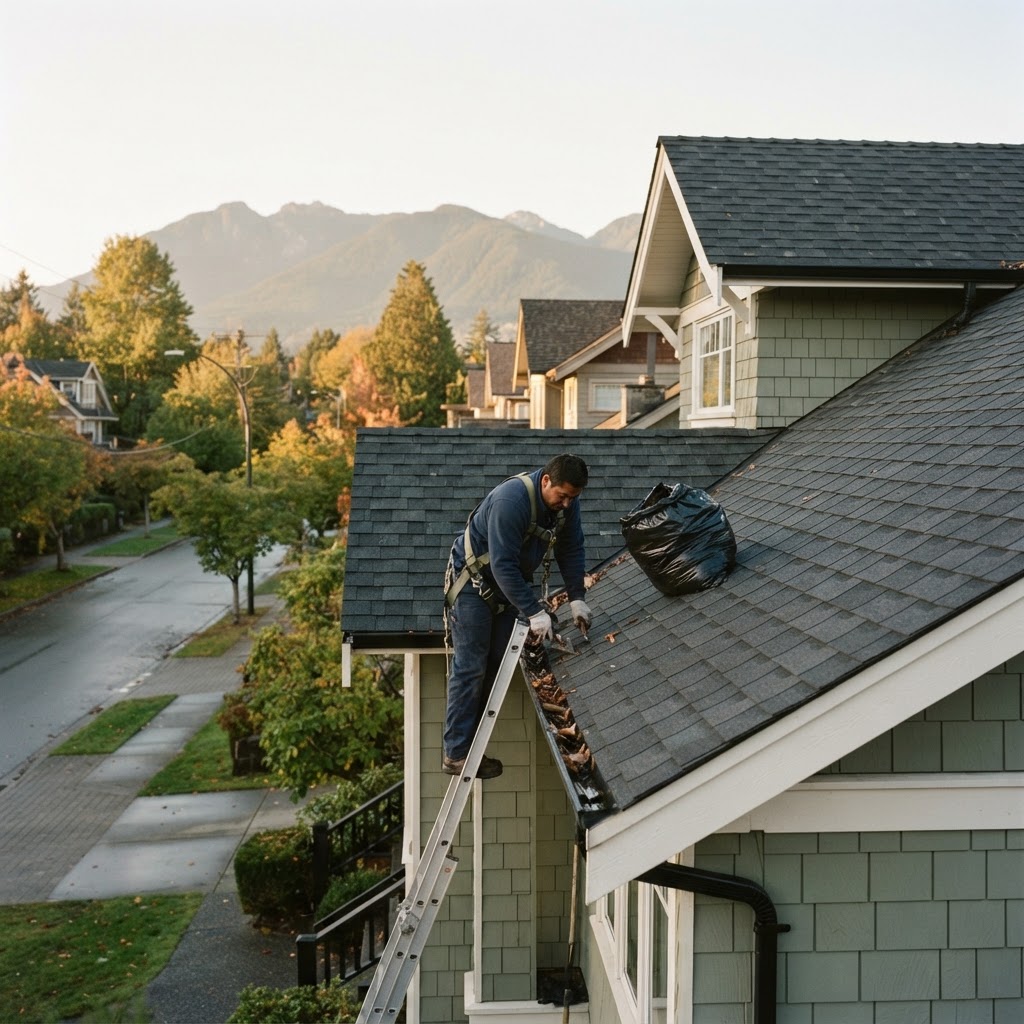
Gutter cleaning should happen at minimum twice a year in Vancouver: once in late autumn after deciduous trees have dropped their leaves, and again in early spring after winter storm debris has accumulated. Homes surrounded by conifers may need cleaning three or four times annually because pine and fir needles drop year-round and pack tightly into downspouts. The Canada Mortgage and Housing Corporation recommends seasonal exterior maintenance inspections that include checking gutters, downspouts, and drainage pathways as part of protecting the overall building envelope. Beyond cleaning, it's worth checking that gutters are pitched correctly toward the downspout - a slope of roughly 5 mm for every 1 metre of run is the standard - because flat gutters pool water and accelerate corrosion in aluminium systems.
Gutter repair is something that often gets deferred until there's a visible problem like water pouring over the edge or a section pulling away from the fascia. By that point, damage to the underlying structure has typically already begun. Loose hangers, separated seams, and holes from corrosion are all relatively straightforward repairs when caught early, but they escalate quickly if ignored through a Vancouver rainy season. We recommend having gutters inspected at the same time as a shingle roof inspection, since both assessments overlap considerably and give a complete picture of the drainage system's health. Our detailed guide on Gutter Cleaning & Maintenance covers what to look for and why professional service makes a difference in our climate.
Ice damming is less frequent in Vancouver than in colder inland climates, but it does occur during the occasional cold snaps that bring temperatures below freezing for several consecutive days. When snow accumulates on a roof and melts during the day, the meltwater runs down to the cold eave overhang and refreezes. That ice dam forces water back up under the shingles, bypassing all the weather protection the shingle system provides. Properly functioning gutters - clean, well-pitched, and intact - allow meltwater to drain away quickly rather than pool. Combined with adequate attic insulation and ventilation, which prevents uneven roof surface temperatures, clean gutters are your first line of defence against ice dam formation. If you suspect ice dam damage has already occurred, a professional shingle roofing services inspection is the right next step before any further moisture intrusion develops.
Cedar vs. Asphalt: Choosing the Right Shingle Material
Asphalt shingles dominate Vancouver's residential roofing market for straightforward reasons: they're cost-effective, widely available, and when properly installed, they perform reliably for 20 to 30 years in our climate. Most homeowners we work with opt for architectural-grade asphalt shingles, which have a laminated two-layer construction that provides better wind resistance and a more textured visual profile than three-tab shingles. Section 9.26 of the BC Building Code requires that roofing systems shed water effectively and prevent moisture ingress into the building envelope, and asphalt shingles installed to RCABC steep-slope standards meet that requirement reliably. Fibre-glass reinforced asphalt shingles, which are now the industry standard over organic-mat variants, resist moisture absorption better and maintain their dimensional stability in Vancouver's wet conditions.
Cedar shingles and shakes offer a different set of advantages and trade-offs that are worth understanding before making a material choice. Cedar has a beautiful natural appearance that suits the architectural character of many older Vancouver homes, and it's a genuinely durable material when maintained properly. Untreated western red cedar has natural oils that resist decay, and a well-maintained cedar roof can last 30 to 40 years. However, in a high-humidity, high-rainfall environment like Vancouver, those natural oils deplete over time, and cedar becomes increasingly susceptible to moisture absorption, splitting, warping, and moss growth. Cedar roofs in our climate require more active maintenance than asphalt - typically a preservative treatment or oil application every five to seven years - and they need prompt attention to any cracked or lifted shakes to prevent water ingress.
From a moss and algae perspective, cedar and asphalt present different challenges. Asphalt shingles can be treated with algae-resistant options that include copper-coated granules built into the shingle surface at the factory, offering a degree of passive protection. Cedar, being an organic material, is inherently more hospitable to moss and algae growth once surface oils have diminished. Moss on cedar is particularly damaging because the rhizoid structures can penetrate the wood fibres more deeply than they can into asphalt's mineral surface. That said, both materials require proactive moss management in Vancouver's climate - the difference is in frequency and treatment approach. For a broader comparison of roofing costs and material options, our post on Roof Replacement Cost in Vancouver provides useful context on what different material choices mean for your overall budget.
- Lifespan: asphalt architectural shingles 20-30 years; properly maintained cedar 30-40 years
- Moss resistance: asphalt with copper-coated granules offers passive resistance; cedar requires more frequent proactive treatment as oils deplete
- Maintenance frequency: asphalt needs moss treatment every 2-3 years and periodic inspection; cedar needs preservative treatment every 5-7 years plus regular inspection
- Installation cost: cedar shakes and shingles carry a higher material and labour cost than asphalt; contact us for a free quote for your specific project
- Weight: cedar is lighter than concrete tile but heavier than standard asphalt; most Vancouver residential structures support both without modification
- Appearance: cedar provides a natural, textured aesthetic; architectural asphalt shingles are available in a wide range of colours and profiles to suit most home styles
The right material choice depends on your home's architecture, your maintenance commitment, and your budget. Most Vancouver homeowners we work with choose asphalt for reroofing projects because the combination of lower upfront cost, reliable performance, and lower ongoing maintenance demands makes strong practical sense given the climate. Cedar remains an excellent choice for homeowners who value its appearance and are prepared to invest in the maintenance it requires. In either case, correct installation is non-negotiable: improper fastening patterns, inadequate underlayment, or incorrect exposure spacing will undermine even the best shingle material. Our shingle roofing services cover both materials, and we're happy to walk through the options with you during a free quote consultation so you can make an informed decision for your specific home and budget.
BC Building Code Requirements for Reroofing
Every reroofing project in Vancouver must comply with Section 9.26 of the BC Building Code, which sets out specific requirements for roofing systems to shed water effectively and prevent moisture from entering the building envelope. In our experience installing shingle roofing services across Metro Vancouver, this section is one of the most frequently misunderstood parts of the code by homeowners attempting DIY repairs or hiring unlicensed contractors. The code mandates that all roofing materials, including asphalt shingles, be installed over an appropriate underlayment that acts as a secondary barrier against water infiltration. Skipping this step or using substandard underlayment is a code violation and can void your shingle manufacturer's warranty entirely.
Proper underlayment selection matters a great deal in Vancouver's temperate rainforest climate, where annual precipitation ranges from 1,153 mm at the airport to over 1,458 mm in areas closer to the North Shore mountains, according to Environment Canada's climate normals data. We've seen firsthand how homes with improperly installed or missing underlayment develop chronic leak problems within just a few years, even when the shingles themselves appear intact from the street. Code-compliant underlayment typically means a self-adhering modified bitumen membrane in valleys and eaves, combined with a synthetic or felt underlayment across the field of the roof. The eave protection membrane must extend a minimum distance up the slope past the interior wall line to guard against ice damming, though ice dams are less common in Vancouver than in colder parts of Canada.
Flashing is the other critical component that the BC Building Code addresses under Section 9.26, and it's one of the areas where we most often find deficiencies during our roof inspections. Flashing must be installed at all roof penetrations, along rakes and eaves, around chimneys, and at any wall-to-roof junctions. Most Vancouver homeowners we work with don't realise that improperly lapped or corroded flashing is responsible for the majority of leak calls we receive, far more than shingle failure itself. Using galvanised steel or aluminium step flashing, properly integrated with the underlayment and shingles, is a non-negotiable part of any compliant reroofing job. If your contractor isn't discussing flashing details before starting work, that's a serious warning sign worth taking seriously.
Permit requirements are another aspect of BC Building Code compliance that homeowners often overlook. Whether a reroof needs a permit depends on the municipality and the scope of work, especially if structural repairs are involved. We check whether your project needs a permit with the local building department before work starts. If it does, we handle the application, so you're never left navigating municipal paperwork on your own. You can review Roof Replacement Cost in Vancouver details on our blog to understand what a fully compliant reroofing scope typically includes.
WorkSafeBC Safety Standards for Roof Maintenance
Hiring a roofing contractor who follows WorkSafeBC fall protection regulations isn't just a legal formality. It's one of the most important ways you protect yourself as a homeowner from significant financial and legal liability. Under BC law, if a worker is injured on your property and the contractor they work for doesn't carry proper WorkSafeBC coverage, you as the property owner could be held responsible for compensation costs. We've seen this scenario cause serious financial hardship for homeowners who assumed they were dealing with a legitimate contractor simply because the price seemed reasonable. Always ask for a WorkSafeBC clearance letter before any worker sets foot on your roof.
WorkSafeBC's roofing safety regulations require that contractors develop and implement a fall protection plan for any work performed at heights above three metres. This plan must include the use of guardrails, safety nets, or personal fall arrest systems depending on the pitch of the roof and the nature of the work being performed. In our experience, steep-slope residential roofs in Vancouver, which commonly range from 4:12 to 8:12 pitches, require full harness and anchor systems to meet compliance standards. Contractors who skip these precautions are not only putting their workers at risk but are also operating illegally, which should give you serious pause about the quality of their workmanship as well.
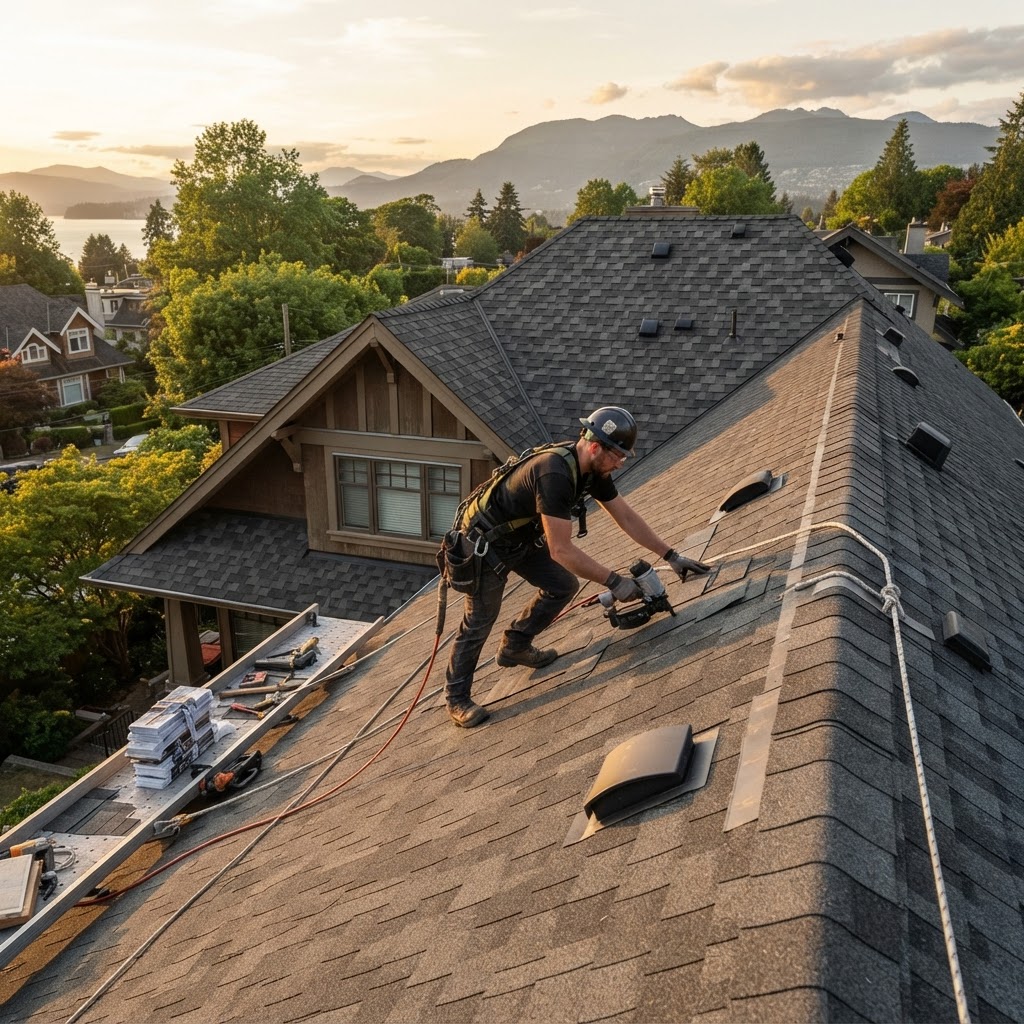
Beyond fall protection, WorkSafeBC also mandates safe practices around ladder use, material handling, and hazardous material identification, including the presence of older asbestos-containing roofing products in homes built before the 1990s. Many Vancouver homes were built during the mid-20th century, and some may have legacy roofing materials that require proper testing and disposal procedures before a new shingle roofing services project can begin. Our team is trained to identify potential hazards during the initial inspection phase and to follow all required protocols if asbestos-containing materials are found. This protects our workers, your family, and your neighbours throughout the project duration.
Safe roofing practices also matter for the quality of the finished product. Roofers who rush because they're cutting corners on safety are often the same contractors who rush through installation details like nail placement, shingle alignment, and flashing integration. At Red Maple Roofing, every crew member is covered under WorkSafeBC, and our safety protocols are reviewed at the start of every job. We encourage you to read more about what safe and professional roof work looks like on our How to Choose a Roofing Contractor in Vancouver guide, which covers what homeowners should expect from a qualified crew on site.
Choosing the Right Shingle Roofing Services Contractor in BC
Not all roofing contractors are created equal, and in a market as active as Metro Vancouver, it pays to do your homework before signing any contract. One of the strongest indicators of a reputable contractor is membership or accreditation with the Roofing Contractors Association of BC (RCABC), which sets rigorous standards for installation practices, material specifications, and workmanship warranties for asphalt shingle roofing. RCABC members are also eligible to offer the RoofStar Guarantee, which provides homeowners with a third-party-backed workmanship warranty above and beyond what the shingle manufacturer offers. Most Vancouver homeowners we work with tell us they weren't aware of this distinction when they hired their previous contractor, often only discovering the gap in coverage when a leak problem emerged years later.
When comparing quotes for shingle roofing services, look beyond the bottom-line number and ask detailed questions about what's included. A truly complete quote should specify the shingle brand and grade, underlayment type and coverage, flashing material specifications, disposal of old roofing materials, and the warranty terms for both materials and labour. We've seen homeowners choose the lowest quote only to find out after the fact that the contractor planned to re-overlay existing shingles without a tear-off, skip the eave protection membrane, or use builder-grade three-tab shingles instead of the dimensional product they expected. Transparency in quoting is a direct reflection of transparency in how a contractor operates on site.
References and online reviews are useful screening tools, but nothing replaces asking a contractor to show you a recently completed job in your neighbourhood. Vancouver's climate means that roof performance in damp, moss-prone conditions is the real test of quality installation. Ask specifically whether the contractor uses algae-resistant shingles with copper granules, applies zinc or copper strips at the ridge for long-term moss prevention, and cleans gutters as part of the post-installation process. For more context on why gutter maintenance ties directly into roof longevity, our Gutter Cleaning & Maintenance resource explains the relationship between blocked gutters and premature shingle deterioration in detail. You can also review Roof Moss Removal & Treatment page to understand the scope of professional moss treatment.
Red Maple Roofing proudly serves homeowners across Metro Vancouver and the surrounding region. Our team carries full WorkSafeBC coverage, holds the appropriate licences, and follows both BC Building Code requirements and RCABC best practices on every job. Whether you need a full reroof, targeted repairs, moss treatment, or a detailed inspection to assess your roof's current condition, we're here to provide honest, professional guidance without pressure. Check out our service areas to confirm we cover your neighbourhood, or visit our services page for a full breakdown of what we offer. We believe that choosing the right contractor for your shingle roofing services is one of the best investments you can make in the long-term health of your home.
How often should I schedule shingle roofing services in Vancouver?
What is the safest method for moss treatment on asphalt shingles?
How do I know if my home needs a minor roof repair or complete reroofing?
Are gutter cleaning and repair necessary for maintaining my roof warranty?
What are the BC Building Code requirements for shingle underlayment?
Protecting your home in Vancouver's demanding climate starts with reliable, professionally delivered shingle roofing services. From code-compliant underlayment and flashing to WorkSafeBC-covered crews and RCABC-aligned installation standards, every detail matters when your roof faces over 1,400 mm of rain each year in some parts of the region. At Red Maple Roofing, we bring the expertise, transparency, and workmanship that Vancouver homeowners deserve. Call us today at (778) 239-1701 or visit our free quote page to book your inspection and get a detailed, no-obligation estimate for your roofing project.