Get a No-Obligation Quote
We respond within 2 hours during business hours.

By the Red Maple Roofing team in Coquitlam. Reviewed for accuracy by Rasheed, Founder & Lead Estimator, Red Maple Roofing.
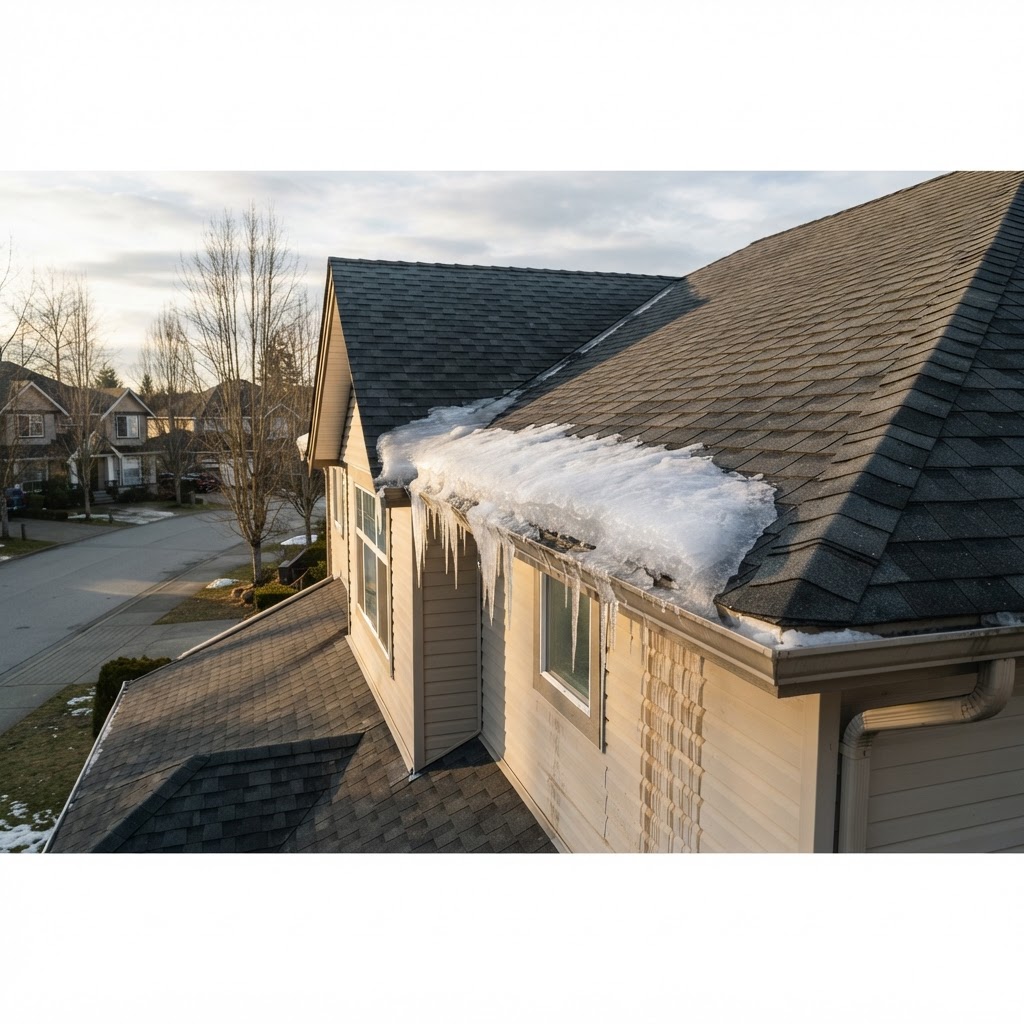
Ice dams on roof surfaces form when uneven temperatures cause snow to melt on the warmer upper roof and refreeze at the colder eaves, creating a solid wall of ice that blocks drainage. This cycle is driven by heat loss from your home into the attic space, which forces the roof surface above the living area to stay above freezing while the edges remain cold. In the Lower Mainland, where we see roughly 1,200 mm of annual precipitation, these winter issues can cause significant damage to your property. Understanding these mechanics is essential for protecting your home, as water trapped behind a dam can seep into your attic and walls, leading to costly structural repairs.
- Ice dams result from heat escaping into your attic and creating uneven roof temperatures.
- Proper attic insulation and air sealing are your most effective defenses against these formations.
- Clear heavy snow with a long-handled roof rake from the ground to avoid dangerous falls.
- If you spot interior moisture, contact us for an inspection to prevent long-term damage.
What Causes Ice Dams on Your Roof?
Ice dams occur when a roof deck develops uneven temperatures, specifically when the attic space allows warm air to melt snow on the roof surface while the eaves stay below freezing. As the melted water runs down to the cold gutter line, it refreezes into a ridge of ice that prevents further runoff, forcing water to back up under your shingles. According to the Canada Mortgage and Housing Corporation (CMHC), this heat loss is almost always caused by poor insulation or air leaks within the attic assembly.
When we perform a roof repair in Coquitlam, we often find that the culprit is not just the roofing material itself, but how the attic is breathing. If warm air from your living space migrates into the attic, it warms the underside of the roof deck, melting the snow above. This process is a classic example of building physics where heat finds the path of least resistance through pot lights, attic hatches, or plumbing penetrations.

To stop this cycle, we focus on balancing the attic environment through proper insulation and ventilation. As noted in the CMHC guidance on attic systems, airtightness is the primary defense. If you suspect your attic is losing heat, requesting a free quote for an inspection can provide you with an itemized report on where the heat loss is happening, whether it is through missing insulation or inadequate ventilation baffles.
We often see homeowners attempt to fix ice dams by adding heat cables. While these can create a channel for water to drain, they only address the symptom. They do not fix the underlying heat loss that is driving the ice formation in the first place.
Why Ice Dams Still Occur in the Lower Mainland
While Vancouver sea-level neighborhoods experience milder winters, higher-elevation areas like Westwood Plateau and Burke Mountain face greater risks due to lower ambient temperatures and higher snow loads. These elevated regions retain snow longer, extending the window of time where a warm roof can create a dangerous freeze-thaw cycle.
Living at higher elevations requires a more robust approach to roof design. According to the research on estimating snow loads, roofs at higher altitudes must account for heavier, sustained accumulations. When we replaced the roof on a hillside Coquitlam home last fall, we stripped away the old cedar shakes and installed a high-performance system including new plywood sheathing and ice-and-water shields at all vulnerable eaves to prevent water migration.
If you are concerned about your home, checking your roof maintenance checklist is a great starting point. For residents in our service areas, we recommend a simple visual inspection from the ground using binoculars to look for large icicles or snow buildup. Never climb on an icy roof yourself. Instead, use a long-handled roof rake from the ground to carefully clear snow if it becomes excessive, which can prevent the dam from ever gaining a foothold.
Signs of Ice Dam Damage Inside Your Home
Water stains on your ceilings, damp insulation, or peeling paint near exterior walls are common indicators that an ice dam has forced water into your home. These signs occur when the backed-up water rises above the level of your roof shingles and finds a path through the underlayment and into your living space.
If you notice these issues, it is time to act quickly to prevent further damage. We often get calls regarding these symptoms, and we treat them as urgent; if you suspect a leak, contact our team to discuss emergency roof repair options. Our process is transparent: we arrive, conduct a professional inspection, and provide an itemized written quote before any work begins.
Beyond active leaks, watch for these secondary signs of damage:
For those seeking peace of mind throughout the wet season, our maintenance plans range from $399 to $1,399 per year. These plans, as detailed on our pricing page, ensure your gutters are free of debris and your roof condition is documented by our team twice a year. Taking care of your roof before the heavy snow hits is the most cost-effective way to avoid the headache of interior water damage.
Effective Prevention Strategies for Ice Dams on Your Roof
The most effective way to prevent ice dams on your roof is to maintain a cold roof deck by sealing air leaks from your living space and ensuring your attic has proper insulation. By preventing warm air from reaching the underside of the roof sheathing, you stop the snow above from melting and refreezing at the eaves.
When we perform a full roof replacement, we always install a high-quality self-sealing bituminous membrane at the eaves. This ice-and-water shield acts as a critical secondary barrier that prevents water from backing up into your attic should an ice dam form during a particularly cold snap in the Lower Mainland. Proper attic ventilation, as outlined by CMHC guidance, is also essential for moving moisture and heat out of your attic space.

During our inspections, we often look for gaps around plumbing stacks, attic hatches, and recessed lighting. These are common culprits that let warm household air leak into the attic. Addressing these issues is often more affordable than dealing with water damage later. For a comprehensive assessment of your home's thermal efficiency, we provide itemized written quotes after an on-site inspection. If you are concerned about your current setup, reading our roof maintenance checklist can help you identify early signs of trouble.
- Seal attic air leaks around pipes and electrical boxes
- Add insulation to meet current building code standards
- Ensure attic vents are not blocked by insulation
- Install self-sealing membranes during a reroofing project
- Schedule regular professional roof inspections
Safe Removal and Maintenance Procedures
You should never use sharp tools or salt to clear ice from your shingles, as these methods can cause permanent damage to the roofing materials. The safest way to maintain your roof is to use a long-handled roof rake from the ground to clear heavy snow before it has a chance to turn into an ice dam.
When we inspect a roof, we focus on identifying the root cause of heat loss rather than just addressing the symptoms. If you see signs of water intrusion, our team provides expert roof repair in Coquitlam to address the damage. We also offer annual maintenance plans that keep your roof and gutters in top shape. For homes under heavy tree cover, keeping gutters clear is vital, as referenced in our guide on gutter cleaning costs.
If you suspect your roof is struggling with drainage, do not climb up to investigate yourself. Slippery, icy surfaces are extremely dangerous. Instead, contact us for a professional inspection where we can provide a photo report of the current condition of your flashings, shingles, and ventilation. We are fully insured and WorkSafeBC registered, ensuring peace of mind for all our clients in the Lower Mainland.
Can I use salt to melt ice dams on my roof?
How do I know if my attic has enough insulation to prevent ice dams?
Are heat cables a permanent solution for ice dams?
Should I remove snow from my roof after every snowfall?
What should I do if I see water leaking into my home from an ice dam?
Proactive roof maintenance is the best way to stop ice dams on your roof before they lead to costly interior damage. At Red Maple Roofing, we help homeowners in Coquitlam and across the Lower Mainland keep their homes secure through professional inspections, honest advice, and expert repair services. For a free estimate, call us today at (778) 239-1701.