Get a No-Obligation Quote
We respond within 2 hours during business hours.

By the Red Maple Roofing team in Coquitlam. Reviewed for accuracy by Rasheed, Founder & Lead Estimator, Red Maple Roofing.
A fascia board is the horizontal trim piece running along the lower edge of your roof that supports your gutter system and protects your building envelope from the elements. If you are asking what is a fascia on a house, think of it as the barrier that seals the gap between your roof and the outer wall. Understanding this component is crucial for homeowners in the Lower Mainland, where moisture management is the difference between a dry home and structural decay.
- Fascia boards hold your gutters and block pests from entering your attic.
- Soffits provide necessary air intake for your attic ventilation system.
- Routine inspections help prevent water damage in our rainy climate.
- Red Maple Roofing offers professional assessments to identify early rot.
What Is a Fascia on a House?
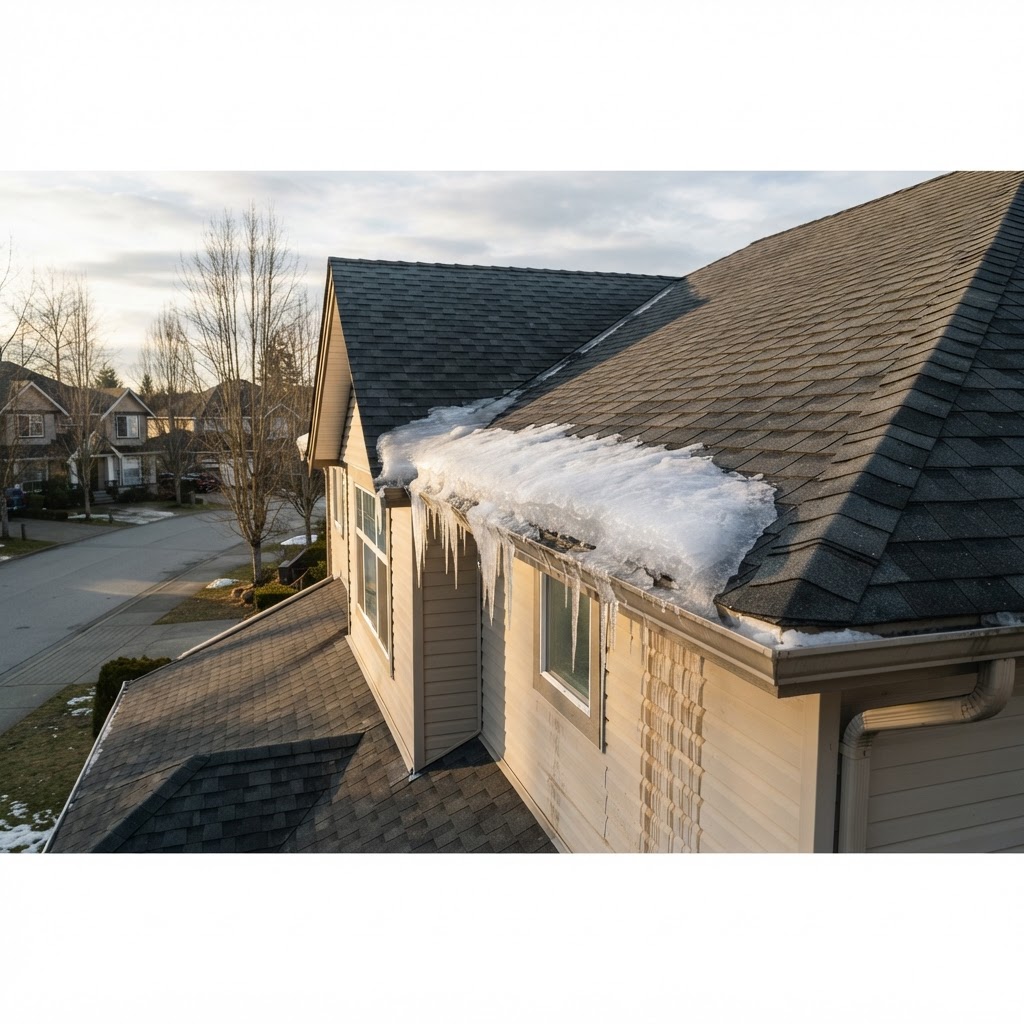
The fascia is the long board you see running horizontally along the roofline, serving as the primary anchor for your gutter system. While it adds a finished look to your home, its structural role is to seal the roof edge, keeping wind, rain, and wildlife out of your roof space.
Directly below the fascia sits the soffit, which covers the underside of the roof overhang. The soffit is essential for proper attic ventilation, allowing air to circulate and preventing moisture buildup. In our experience at Red Maple Roofing, when homeowners neglect these systems, they often find that simple blocked vents lead to significant issues with mold in the attic. We always check that these components are properly flashed to meet industry standards for water shedding.

For those unsure if their system is failing, we recommend a professional inspection. We do not just look at the wood, but also the metal drip edge that forces water away from the fascia and into the gutter. If your drip edge is missing or incorrectly installed, water will curl under the shingle and soak into the fascia wood, causing it to swell and rot from the inside out.
In our experience, rot often starts behind the gutter rather than on the face of the board. If you do not have a drip edge properly tucked under the shingles and overhanging the fascia, you are essentially inviting water into your roof structure every time it rains.
Why Fascia and Soffit Rot in Our Climate
Moisture is the primary enemy of your roofline in the Lower Mainland, where we endure roughly 1,200 mm of annual precipitation according to Environment and Climate Change Canada data. Because this moisture is constant, wood components like fascia boards can reach a point of saturation where they decay rapidly.
When we visit homes in Coquitlam or Vancouver for fascia and soffit repair, we often find that the problem began with simple neglect. Clogged gutters act like a dam, forcing water to spill over the back of the gutter and against the wood fascia. Once the wood stays wet for too long, it begins to rot, and the nails holding your gutter lose their grip.
Another common issue we see is painted-shut soffit vents. Some homeowners paint over their vents to match the trim, which effectively seals off the attic. Without this intake, moisture stays trapped in your insulation, leading to mold and long-term damage to the roof deck itself. If you notice high humidity or condensation in your attic, check the soffits first. For maintenance, you can often keep these clear with simple cleaning, which is far cheaper than full structural repairs.

When our team assesses these issues, we follow strict best practices to ensure the building envelope remains sealed. We often find that the issue is not just the board itself but a lack of proper flashing. If you have a leaking roof, check out our guide on how to find a roof leak from inside your house to see if the moisture is tracking down from the eaves.
Signs Your Fascia and Soffit Need Repair
You can identify most fascia and soffit issues from the ground by looking for sagging gutters, peeling paint, or visible gaps where the fascia meets the wall. These signs indicate that the wood behind the facade has likely softened or decayed.
- Gutters that pull away from the roof edge or sag in the middle.
- Peeling, bubbling, or cracked paint along the horizontal roof trim.
- Pests or bees entering the gap between your fascia and roof deck.
- Dark stains on the underside of the soffit paneling.
- Debris or plant growth visible behind the gutter line.
During our inspections, like the one we completed for a recent Coquitlam hillside project, we use binoculars and camera equipment to examine these edges without needing to walk the roof. We focus on areas where conifers overhang the house, as those create high amounts of debris that accelerate gutter clogs. Regular gutter maintenance is the most cost-effective way to avoid these problems entirely.
If you spot these signs, contact us for an inspection. We are WorkSafeBC-registered and carry $2,000,000 in commercial general liability insurance, so you can trust we handle the work safely. Whether it is a small section of fascia or a total replacement, we provide an itemized written quote after an on-site visit. For those wanting peace of mind year-round, our maintenance plans range from $399 up to $1,399 annually, helping us catch these issues before they turn into major structural repairs.
Repair vs. Replacement: Making the Right Choice
When we address localized rot or storm damage, we can often perform a targeted repair, but extensive deterioration usually necessitates a full-run replacement to ensure the structural integrity of your roof edge. Because your soffit, fascia, and drainage systems function as a single interconnected building envelope, we frequently recommend addressing them as one cohesive project to prevent recurring moisture issues.
During our work on residential sites, such as the Coquitlam hillside home we recently transitioned from cedar shake to asphalt, we look closely at how these elements tie into the wall flashing and roof deck. If the underlying wood framing is sound, a repair might involve removing only the damaged section of the board, splicing in new pressure-treated lumber, and ensuring proper flashing installation to shed water away from the structure. According to industry standards, maintaining a proper drip edge is essential to guide water directly into your gutters rather than allowing it to run behind the fascia.

- The extent of wood rot or insect damage
- Whether existing flashing was installed correctly during the original build
- The current condition of your gutter system
- Signs of water staining inside your attic
- Evidence of blocked ventilation that could accelerate future decay
Sometimes, we find that the most cost-effective approach is actually the simplest. If only a small section is compromised by a minor leak, we may recommend a patch rather than a full replacement. However, if the damage is widespread, it often points to a systemic issue like poor ventilation or neglected gutter cleaning, which we discuss in our roof repair vs. Replacement guide. As a BC-based roofing contractor, we emphasize that ignoring these small signs frequently leads to more expensive structural repairs later.
Professional Inspection and Maintenance for Your Home
We provide transparent, itemized written quotes after an on-site inspection to confirm exactly what is needed for your specific roof profile. Regular maintenance is the most effective way to protect your building envelope and prevent the premature failure of your roof edge components, especially given the heavy rainfall we experience in the Lower Mainland.
Understanding what is a fascia on a house involves recognizing its dual role as a structural component and a weather barrier. During a professional inspection, we check for proper clearance, secure attachment, and the integrity of the paint or sealant protecting the wood. We also assess the attic ventilation through your soffits, as moisture control is vital to prevent long-term rot from the inside out. Following WorkSafeBC regulations, we conduct these assessments with proper fall protection to ensure the safety of your property and our team.
Our maintenance plans are designed to catch these issues before they cause significant damage. You can choose from our basic care plan at $399/yr, our premium care option, or our complete protection plan at $1,399/yr. By keeping gutters clean and ensuring vents remain unobstructed, you minimize the risk of water backup behind the fascia board. You can learn more about scheduling your next check on our roof maintenance page or review our full pricing structure to find the best fit for your home.
What is the difference between soffit and fascia?
Can I repair my own fascia board?
How often should I inspect my fascia and soffit?
Do I need to replace my gutters when replacing fascia?
What materials are best for fascia in Vancouver's climate?
If you are concerned about the integrity of your roof edge or need advice on what is a fascia on a house, Red Maple Roofing is here to help. We are a Malarkey Certified, WorkSafeBC-registered company that prioritizes honest assessment and long-term protection for your property. Contact us today at (778) 239-1701 for a free inspection or to discuss our professional repair services.